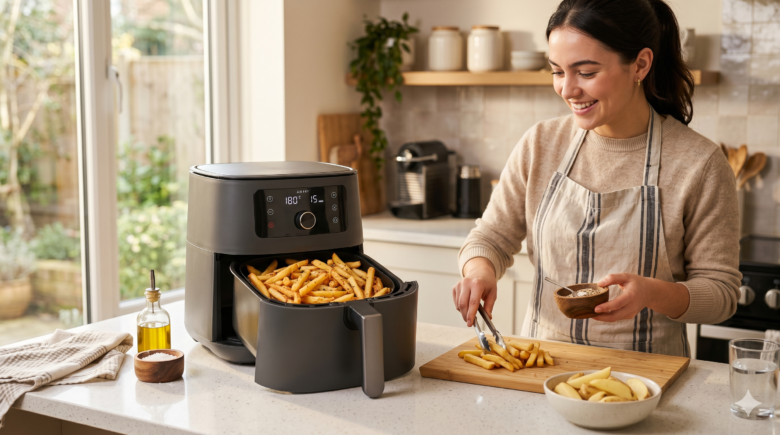
Buying your first air fryer is exciting. With promises of crispy food, faster cooking times, and less oil, it’s easy to see why air fryers have become one of the most popular kitchen appliances in recent years. However, many first-time users feel a bit overwhelmed when they unpack their new machine. Questions like “Do I need to preheat it?”, “What can I cook first?”, and “How do I avoid burning food?” are incredibly common.
The good news is that learning how to use an air fryer is much easier than it seems. Once you understand a few basic principles, you’ll be able to prepare delicious meals, snacks, and desserts with confidence. This guide will walk you through everything you need to know before, during, and after your first air fryer experience.
What Is an Air Fryer and How Does It Work?
An air fryer is a countertop appliance that cooks food by circulating hot air at high speed around the ingredients. This rapid air circulation creates a crispy outer layer similar to frying, but with significantly less oil.
Unlike traditional deep frying, where food is submerged in oil, an air fryer uses convection heat to achieve a golden-brown texture. This makes it a healthier and more convenient option for many recipes.
Benefits of using an air fryer include:
- Faster cooking times
- Reduced oil consumption
- Easy cleanup
- Energy efficiency
- Crispy textures without deep frying
- Versatility for cooking meats, vegetables, snacks, and desserts
Understanding how the appliance works is the first step toward achieving consistently great results.
What to Do Before Using Your Air Fryer
Before cooking your first meal, it’s important to properly prepare your new appliance.
Read the user manual.
Every air fryer model has slightly different features and controls. Spend a few minutes reading the manufacturer’s instructions to understand the following:
- Temperature settings
- Cooking modes
- Basket capacity
- Safety recommendations
- Cleaning instructions
This simple step can help prevent mistakes and improve your cooking experience.
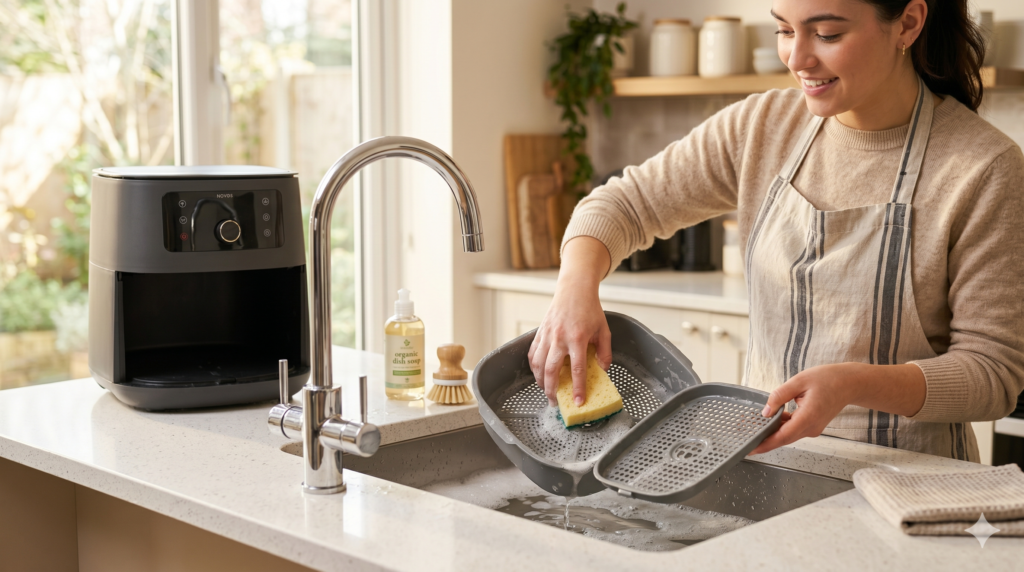
Wash All Removable Parts
Manufacturing residues and packaging dust may remain on the basket and trays.
Wash all removable components using:
- Warm water
- Mild dish soap
- A soft sponge
Dry everything thoroughly before reassembling the appliance.
Run an Empty Test Cycle
Many manufacturers recommend running the air fryer empty before its first use.
Set the temperature to 400°F (200°C) and run it for 10 to 15 minutes. This helps burn off any manufacturing odors and ensures the appliance is ready for cooking.
You may notice a slight smell during this process, which is normal and usually disappears after the first cycle.
Step-by-Step: Cooking Your First Meal
Once your air fryer is clean and ready, it’s time to cook something simple.
Frozen French fries are one of the easiest beginner-friendly foods.
Step 1: Preheat the air fryer.
Some models require preheating, while others do not.
If recommended, preheat your air fryer for 3 to 5 minutes at the desired cooking temperature.
Preheating helps food cook more evenly and creates better browning.
Step 2: Prepare Your Food
Pat ingredients dry if necessary.
For fresh vegetables or meats, lightly coat them with oil to enhance crispiness.
A little oil goes a long way. One teaspoon is often enough.
Step 3: Arrange Food Properly
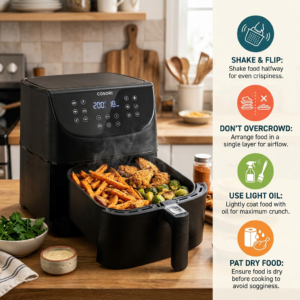
Avoid overcrowding the basket.
Air fryers work by circulating hot air around the food. Overfilling the basket blocks airflow and leads to uneven cooking.
Instead:
- Arrange food in a single layer
- Leave space between pieces
- Cook in batches if needed
Step 4: Set the Temperature and Time
Most air fryer recipes provide recommended settings.
As a general rule:
| Food | Temperature | Time |
|---|---|---|
| French Fries | 400°F (200°C) | 15–20 min |
| Chicken Breast | 375°F (190°C) | 18–22 min |
| Chicken Wings | 400°F (200°C) | 20–25 min |
| Vegetables | 375°F (190°C) | 10–15 min |
| Frozen Snacks | 380°F (193°C) | 8–12 min |
Always check food a few minutes before the suggested cooking time ends.
Step 5: Shake or Flip Halfway Through
For the best results, shake the basket or flip food halfway through cooking.
This promotes:
- Even browning
- Better texture
- More consistent cooking
Many air fryers include reminders for this step.
Step 6: Check for Doneness
Use a food thermometer for meats.
Recommended internal temperatures include:
- Chicken: 165°F (74°C)
- Turkey: 165°F (74°C)
- Pork: 145°F (63°C)
- Beef steaks: Based on preferred doneness
Checking temperature ensures both safety and quality.
Best Foods to Cook First
Starting with simple recipes helps you become familiar with your air fryer’s performance.
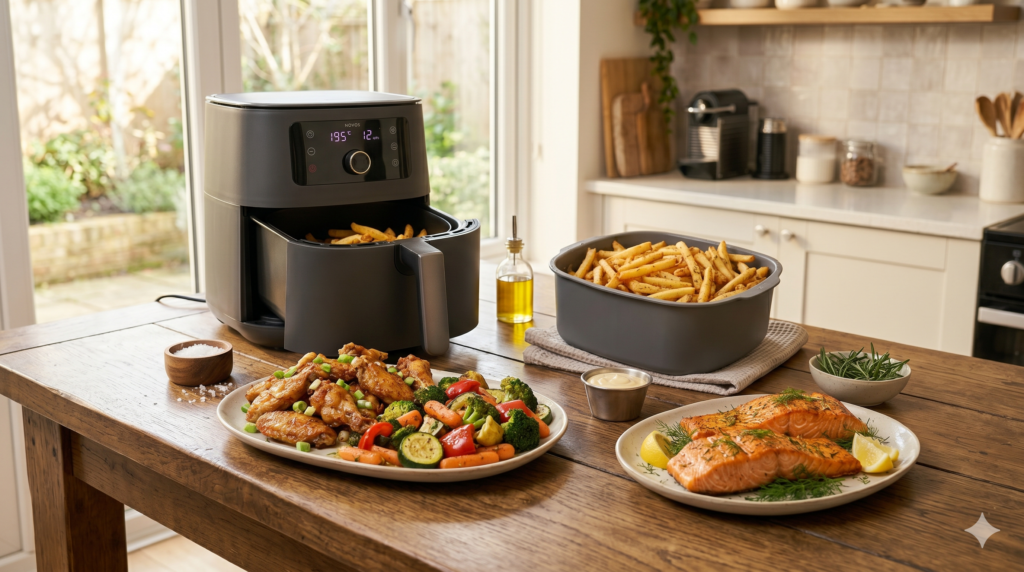
Excellent beginner foods include:
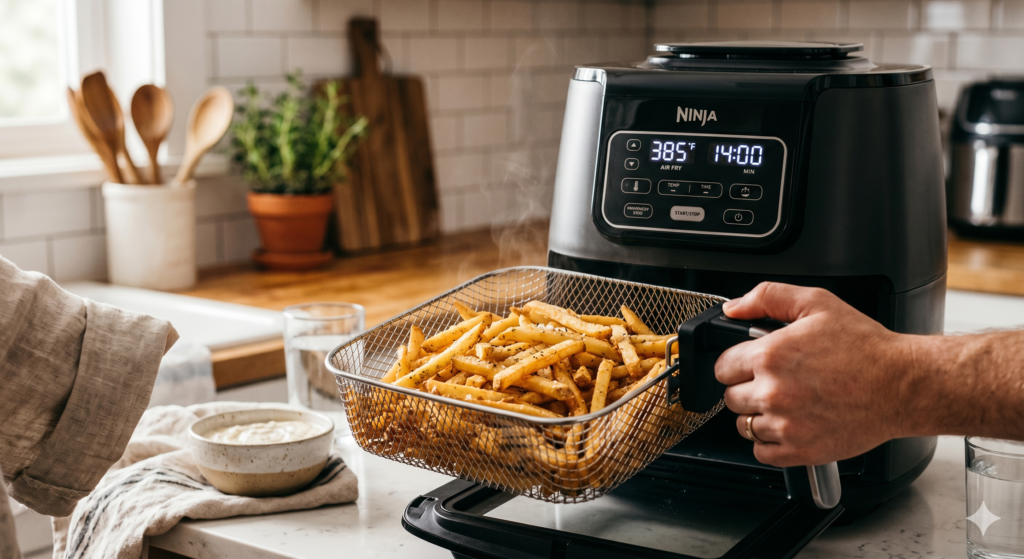
French Fries
A classic air fryer favorite.
They cook quickly and allow you to learn how airflow affects crispiness.
Chicken Wings
Perfect for practicing temperature control and basket shaking.
Frozen Snacks
Items such as mozzarella sticks, spring rolls, and chicken nuggets are easy and forgiving.
Roasted Vegetables
Try:
- Broccoli
- Carrots
- Zucchini
- Brussels sprouts
Vegetables become caramelized and flavorful in the air fryer.
Salmon Fillets
Air fryers excel at cooking fish quickly while maintaining moisture.
Common Air Fryer Mistakes Beginners Make
Even experienced home cooks make mistakes when learning to use an air fryer.
Overcrowding the Basket
This is the most common error.
Too much food prevents proper air circulation and results in uneven cooking.
Using Too Much Oil
Air fryers require far less oil than traditional frying.
Excess oil can create smoke and soggy food.
Forgetting to Shake the Basket
Foods such as fries and nuggets benefit greatly from occasional shaking.
Skipping this step often causes uneven browning.
Not Adjusting Traditional Recipes
Air fryers generally cook faster than conventional ovens.
A common conversion rule is:
- Reduce oven temperature by 25°F (15°C)
- Reduce cooking time by approximately 20%
Ignoring Food Temperature
Visual appearance can be misleading.
Always use a thermometer when cooking meat and poultry.
Essential Air Fryer Safety Tips
Safety should always come first.
Follow these important guidelines:
Keep the Appliance on a Stable Surface
Place the air fryer on a flat, heat-resistant countertop.
Avoid using it near edges where it could fall.
Allow Proper Ventilation
Air fryers release hot air during operation.
Leave several inches of space around the appliance.
Avoid Wet Batter
Traditional wet batters can drip through the basket and create a mess.
Instead, use breaded coatings designed for air frying.
Never Use Aerosol Cooking Sprays
Many non-stick coatings can be damaged by aerosol sprays.
Use a refillable oil sprayer or lightly brush oil onto food.
Unplug After Use
Once cooking is complete and the appliance has cooled, unplug it for safety.
How to Clean Your Air Fryer
Proper maintenance extends the life of your appliance and improves performance.
After Every Use
- Allow the air fryer to cool.
- Remove the basket and tray.
- Wash with warm soapy water.
- Dry thoroughly.
- Wipe the interior with a damp cloth.
Weekly Deep Cleaning
For frequent users:
- Inspect the heating element
- Remove grease buildup
- Clean vents if necessary
Regular cleaning prevents smoke and unwanted odors.
Frequently Asked Questions
Do I Need to Preheat My Air Fryer?
Many recipes benefit from preheating, but some modern models heat up so quickly that it may not always be necessary.
Check your manufacturer’s instructions.
Can I Use Aluminum Foil?
Yes, in most cases.
Ensure airflow is not blocked and never cover the entire basket.
Can I Put Raw Meat in an Air Fryer?
Absolutely.
Chicken, beef, pork, fish, and lamb all cook exceptionally well in an air fryer.
Why Is My Food Not Crispy?
Common causes include:
- Overcrowding
- Excess moisture
- Too little cooking time
- Insufficient temperature
Small adjustments often solve the problem.
Can I Reheat Leftovers?
Yes.
Air fryers are excellent for reheating pizza, fried foods, sandwiches, and many other leftovers while preserving texture.
Your air fryer journey starts here.
Learning how to use an air fryer for the first time is simpler than most people expect. By understanding airflow, temperature control, and proper basket arrangement, you can quickly achieve impressive results. Whether you’re making crispy fries, juicy chicken, roasted vegetables, or healthy snacks, the air fryer opens the door to countless meal possibilities.
The more you experiment, the more confident you’ll become. Start with easy recipes, pay attention to cooking times, and don’t be afraid to test new ingredients. Before long, your air fryer will become one of the most frequently used appliances in your kitchen, helping you prepare delicious meals faster, healthier, and with far less effort than traditional cooking methods.