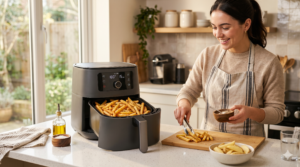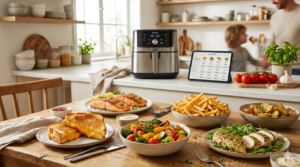
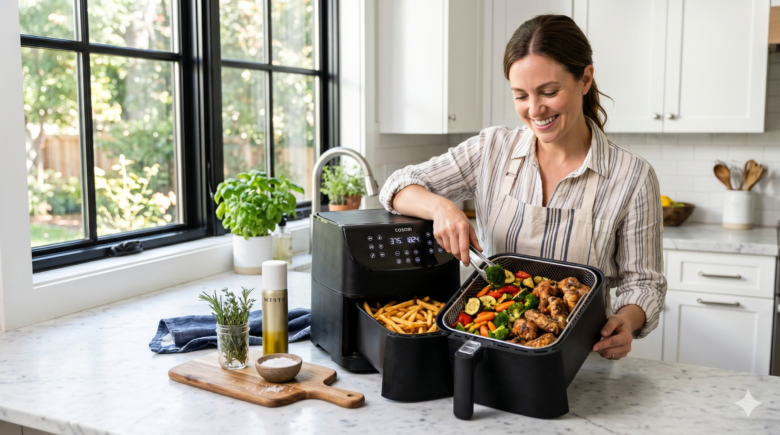
Air fryers have become one of the most popular kitchen appliances in recent years, and for good reason. They offer a faster, healthier, and more convenient way to prepare delicious meals with little to no oil. Whether you’re looking to cook crispy fries, juicy chicken, roasted vegetables, or even desserts, learning how to use an air fryer can completely transform the way you cook at home.
If you’ve recently purchased an air fryer and feel overwhelmed by all the settings, buttons, and cooking recommendations, you’re not alone. Many beginners wonder where to start, how long to cook different foods, and what mistakes to avoid.
This complete guide will walk you through everything you need to know about using an air fryer, from understanding how it works to mastering cooking techniques that deliver perfect results every time.
What Is an Air Fryer and How Does It Work?
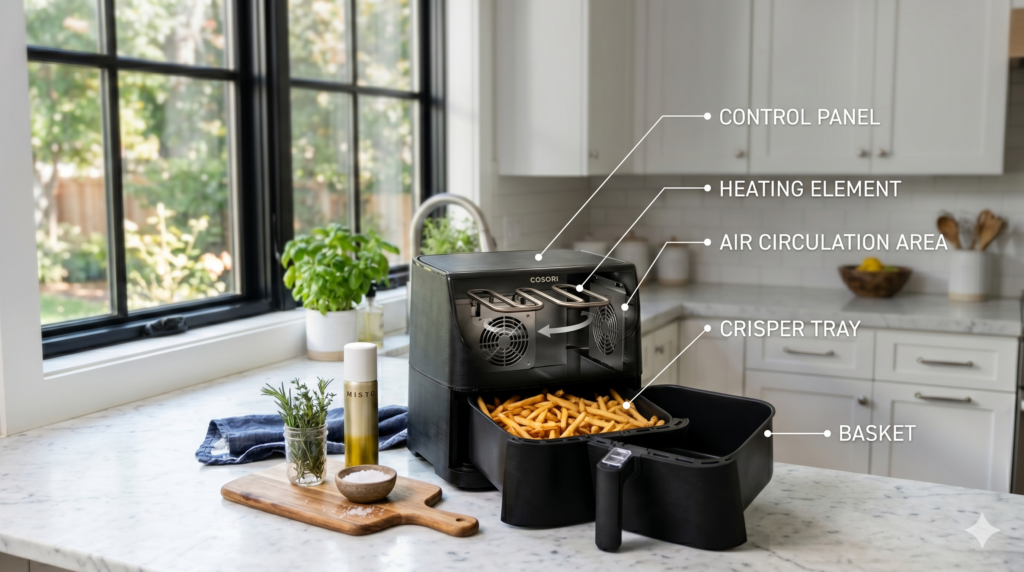
An air fryer is a countertop appliance that cooks food by circulating hot air at high speed around the food. This rapid air circulation creates a crispy outer layer similar to deep-fried foods while using significantly less oil.
Unlike traditional frying methods, air fryers don’t require food to be submerged in oil. Instead, they rely on a powerful heating element and fan system that distributes heat evenly throughout the cooking chamber.
The result is food that is:
- Crispy on the outside
- Tender on the inside
- Lower in fat and calories
- Faster to prepare than many conventional cooking methods
Understanding this principle is the first step in learning how to use an air fryer effectively.
The Main Parts of an Air Fryer
Before cooking your first meal, familiarize yourself with the key components.
Basket
The basket holds the food while allowing hot air to circulate around it.
Crisper Plate or Tray
Many air fryers include a perforated tray that elevates food and improves airflow.
Control Panel
Depending on the model, controls may include:
- Temperature adjustment
- Cooking timer
- Preset cooking programs
- Start and pause functions
Heating Element
Located at the top of the appliance, the heating element generates the heat needed for cooking.
Fan
The fan circulates hot air rapidly around the food, creating the signature crispy texture.
Setting Up Your Air Fryer for the First Time
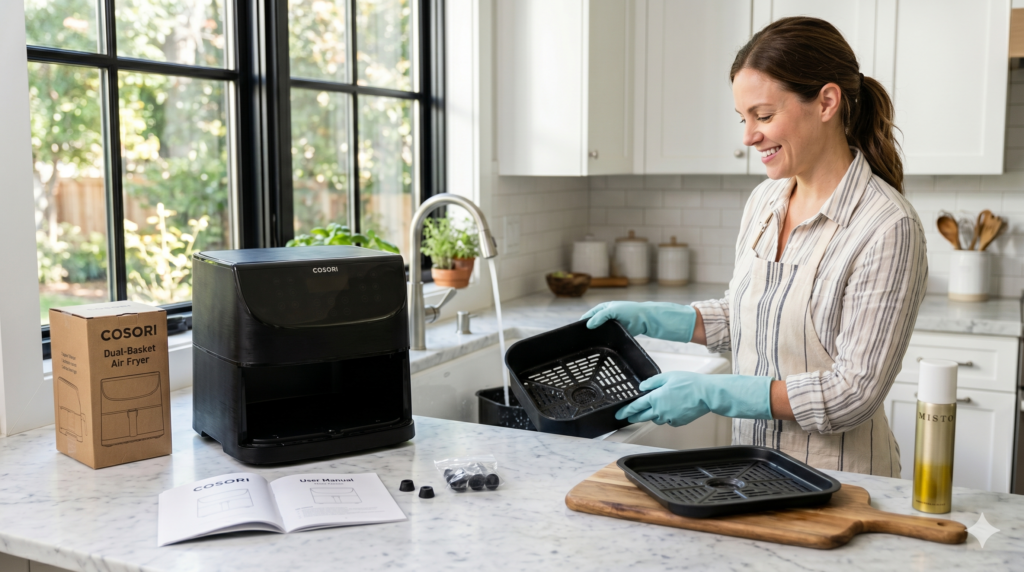
Many beginners make the mistake of immediately cooking with a new air fryer without preparing it properly.
Follow these simple steps:
Step 1: Remove Packaging
Take out all packaging materials, stickers, and protective films.
Step 2: Wash Removable Parts
Wash the basket and tray using warm water and mild dish soap.
Step 3: Dry Thoroughly
Make sure all components are completely dry before reassembling.
Step 4: Run an Empty Cycle
Set the air fryer to 400°F (200°C) for 10–15 minutes without food inside.
This helps eliminate any manufacturing odors and prepares the appliance for cooking.
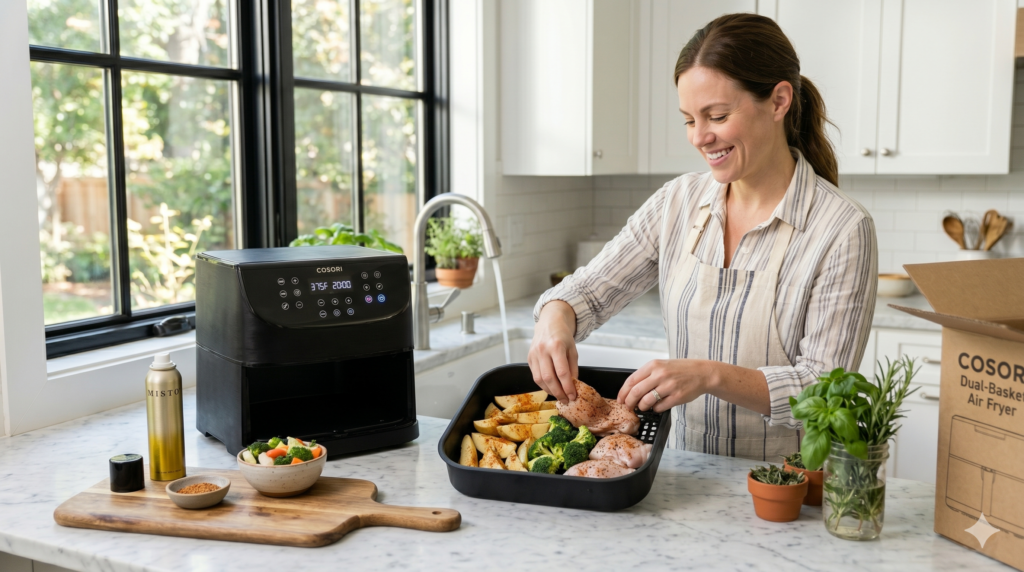
How to Use an Air Fryer: Step-by-Step
Now that your air fryer is ready, let’s go through the basic cooking process.
Step 1: Prepare Your Ingredients
Wash, cut, season, or marinate your food as needed.
For best results:
- Cut ingredients into similar sizes
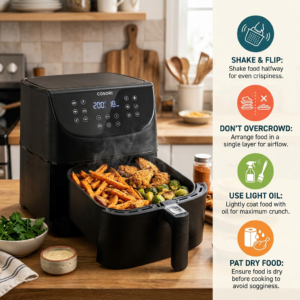
- Pat foods dry before cooking
- Season evenly
Step 2: Preheat the Air Fryer
Although some models don’t require preheating, it often improves cooking consistency.
Preheat for:
- 3–5 minutes
- At your desired cooking temperature
Step 3: Arrange Food Properly
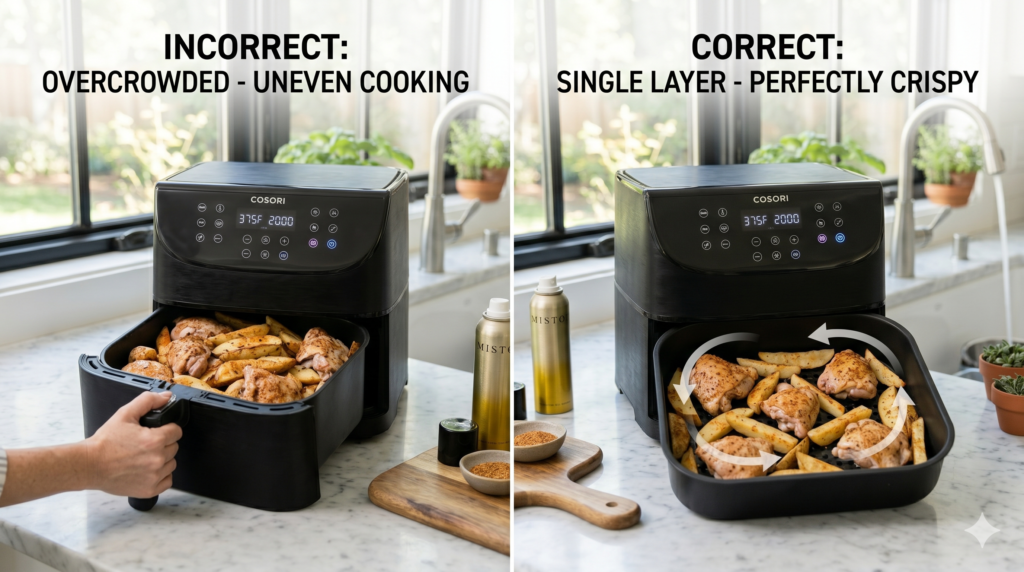
Place food in a single layer whenever possible.
Avoid:
- Overcrowding the basket
- Stacking large amounts of food
- Blocking airflow
Good airflow is essential for achieving crispy results.
Step 4: Set Temperature and Time
Choose the appropriate settings based on the food you’re cooking.
Examples:
| Food | Temperature | Time |
|---|---|---|
| French Fries | 380°F (193°C) | 15–20 min |
| Chicken Wings | 400°F (200°C) | 20–25 min |
| Vegetables | 375°F (190°C) | 10–15 min |
| Salmon | 390°F (199°C) | 8–12 min |
Step 5: Shake or Flip
For even cooking:
- Shake fries halfway through
- Flip meats once during cooking
- Rearrange vegetables if necessary
Step 6: Check for Doneness
Always verify that food is fully cooked before serving.
Using a meat thermometer is highly recommended for proteins.
Step 7: Serve and Enjoy
Once cooking is complete, carefully remove food and serve immediately for maximum crispiness.
Best Foods for Beginners to Cook
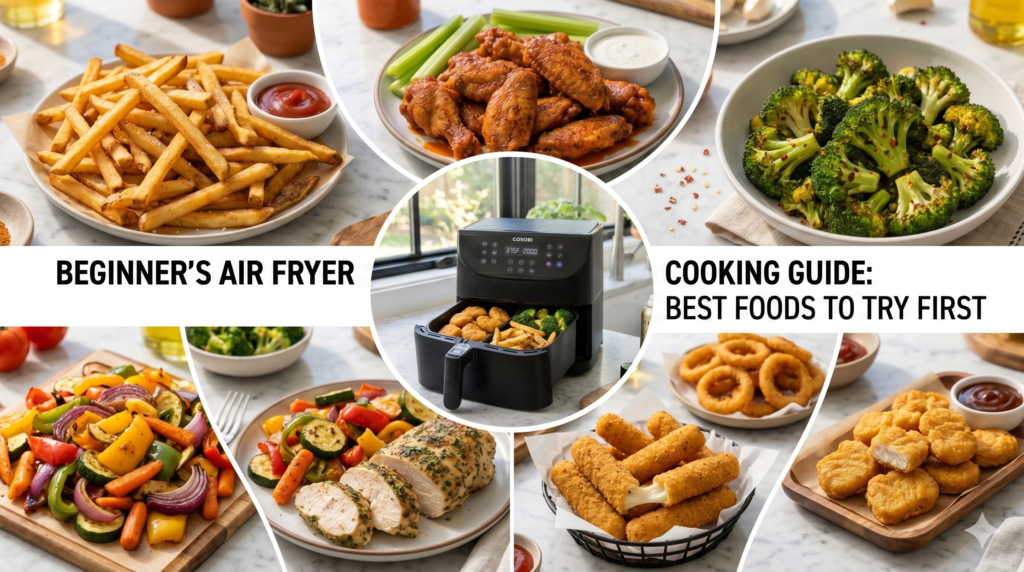
If you’re just starting out, these foods are easy and forgiving.
Frozen French Fries
One of the easiest air fryer foods.
Benefits:
- No thawing required
- Crispy texture
- Quick cooking
Chicken Wings
Air fryers excel at making crispy wings without deep frying.
Vegetables
Popular options include:
- Broccoli
- Brussels sprouts
- Zucchini
- Carrots
- Cauliflower
Chicken Breasts
Air fryers help retain moisture while creating a flavorful exterior.
Frozen Snacks
Items such as:
- Mozzarella sticks
- Spring rolls
- Chicken nuggets
- Onion rings
often cook beautifully in an air fryer.
Foods You Should Avoid in an Air Fryer
While air fryers are versatile, some foods don’t perform well.
Wet Batters
Traditional battered foods can drip through the basket and create a mess.
Excessive Cheese
Loose cheese may melt and stick to the basket.
Leafy Greens
Light greens can blow around due to the powerful fan.
Large Whole Roasts
Some air fryers may not have enough capacity for large cuts of meat.
Common Air Fryer Mistakes Beginners Make
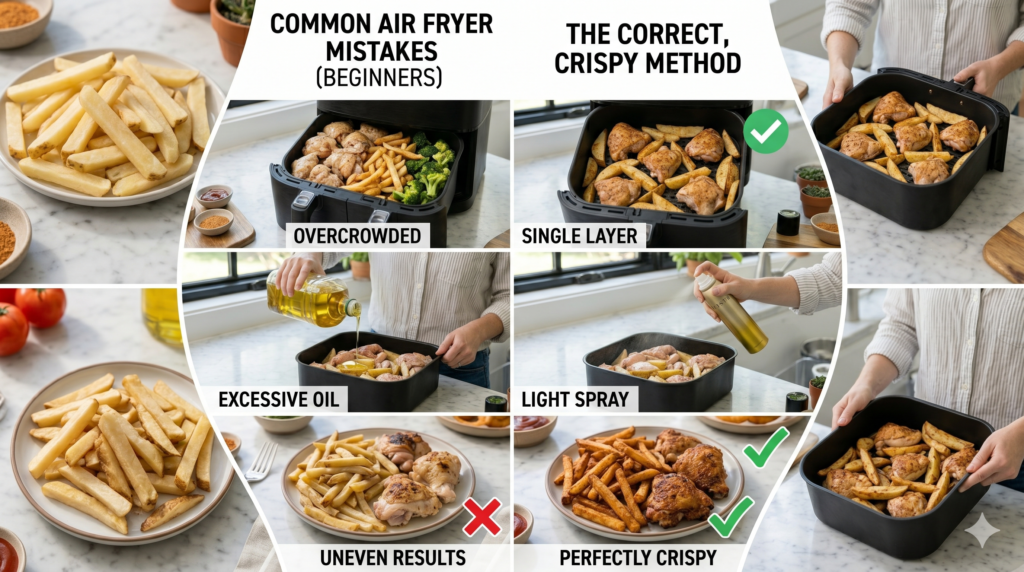
Avoiding these mistakes can dramatically improve your cooking results.
Overcrowding the Basket
Too much food restricts airflow and causes uneven cooking.
Using Too Much Oil
Air fryers require far less oil than traditional frying.
A light spray is usually enough.
Ignoring Cooking Progress
Different models cook differently.
Check food periodically instead of relying solely on recommended times.
Not Preheating
Preheating often improves browning and crispiness.
Forgetting to Shake Food
Turning or shaking food helps prevent uneven cooking.
Air Fryer Temperature Basics
Understanding temperature is essential when learning how to use an air fryer.
Low Temperatures (300–325°F)
Best for:
- Reheating food
- Delicate baked goods
- Slow cooking
Medium Temperatures (350–375°F)
Ideal for:
- Vegetables
- Fish
- Chicken breasts
High Temperatures (390–400°F)
Perfect for:
- Fries
- Wings
- Crispy snacks
- Breaded foods
Cleaning Your Air Fryer Properly
Regular cleaning extends the life of your appliance and prevents unpleasant odors.
After Every Use
- Unplug the air fryer.
- Allow it to cool.
- Remove basket and tray.
- Wash with warm soapy water.
- Wipe interior surfaces.
Weekly Deep Cleaning
- Clean the heating element carefully.
- Remove built-up grease.
- Inspect air vents.
Never immerse the main unit in water.
Helpful Tips for Better Results
These simple tricks can help you get the most out of your air fryer.
Use a Light Oil Spray
A small amount of oil improves browning and crispiness.
Invest in a Meat Thermometer
This ensures food reaches safe internal temperatures.
Cook in Batches
If cooking for multiple people, smaller batches often produce better results.
Keep Notes
Track cooking times and temperatures for your favorite foods.
Use Accessories Carefully
Only use accessories labeled as air fryer-safe.
Frequently Asked Questions
Do I Need Oil in an Air Fryer?
Not always. Many foods cook perfectly without oil, though a light spray can improve texture.
Can I Use Aluminum Foil?
Yes, but ensure it doesn’t block airflow.
Can I Reheat Leftovers?
Absolutely. Air fryers are excellent for reheating pizza, fries, chicken, and many other foods.
Is an Air Fryer Healthier Than Deep Frying?
Generally, yes. Air frying significantly reduces the amount of oil needed while still delivering crispy results.
Can I Bake in an Air Fryer?
Yes. Many air fryers can bake cookies, muffins, cakes, and other desserts.

Start Cooking with Confidence
Learning how to use an air fryer is much easier than many people expect. Once you understand the basics of airflow, temperature, timing, and basket arrangement, you’ll discover that an air fryer can handle everything from quick weeknight dinners to healthy snacks and even homemade desserts.
The best way to build confidence is to start simple. Experiment with frozen foods, vegetables, and basic proteins before moving on to more advanced recipes. With each meal, you’ll gain a better understanding of your specific air fryer model and develop cooking instincts that make every dish easier and more successful.
Before long, you’ll find yourself reaching for the air fryer more often than the oven, enjoying faster cooking times, easier cleanup, and consistently delicious results. Your journey into air fryer cooking starts with a single recipe—and once you experience the convenience and flavor for yourself, you’ll wonder how you ever cooked without it.