An air fryer is one of the most useful appliances in a modern kitchen, but many owners pay little attention to how it should be stored. After cooking, it is tempting to push the appliance into a cupboard, leave it beside the sink, or close the basket while the interior is still warm.
Improper storage can lead to unpleasant odors, trapped moisture, grease buildup, damaged cords, scratched surfaces, and unnecessary wear. In some cases, storing an air fryer incorrectly can even shorten its lifespan or create safety concerns the next time it is used.
The good news is that storing an air fryer properly is simple. Once the appliance has cooled, been cleaned, and dried completely, a few small habits can protect it and keep it ready for your next meal.
This guide explains how to store an air fryer safely, whether you should keep it on the countertop or inside a cabinet, how to protect the basket and power cord, and which common storage mistakes to avoid.
Why Proper Air Fryer Storage Matters
Storage is part of appliance maintenance.
Even if you clean your air fryer regularly, placing it in the wrong environment can expose it to moisture, dust, heat, grease, or accidental damage.
Proper storage helps:
- Prevent unpleasant odors
- Reduce moisture buildup
- Protect the non-stick coating
- Keep dust away from air vents
- Prevent damage to the power cord
- Reduce the risk of scratches and dents
- Extend the useful life of the appliance
A clean, dry, and well-ventilated storage location helps your air fryer stay in better condition between uses.
Let the Air Fryer Cool Completely
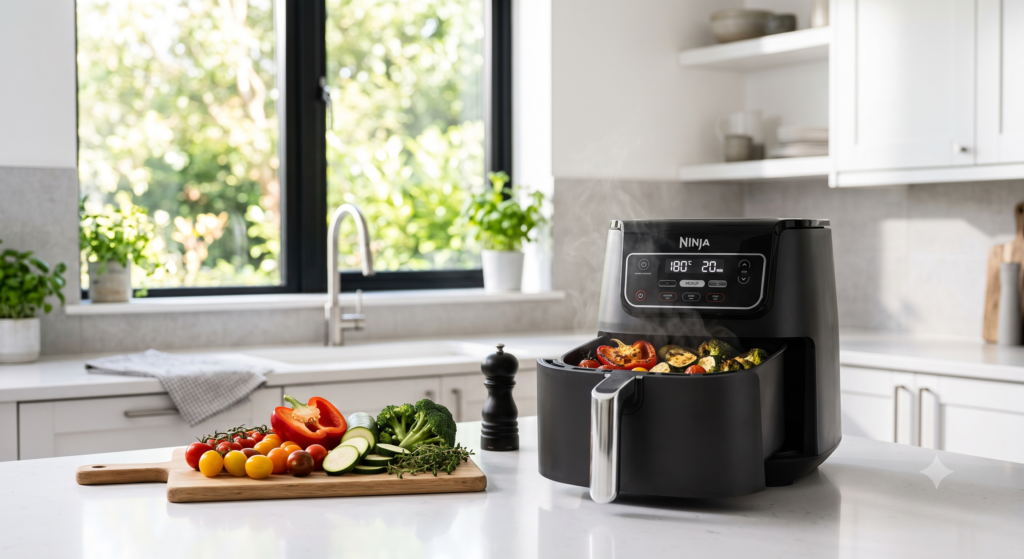
Never store an air fryer immediately after cooking.
The appliance, basket, heating element, and cooking chamber may remain hot for 30 minutes or longer. Placing a warm air fryer inside a closed cabinet can trap heat and moisture.
Follow these steps
- Turn off and unplug the appliance.
- Place it on a heat-resistant countertop.
- Remove the basket or open the drawer slightly.
- Allow the appliance to cool completely.
- Check that the exterior and power cord are no longer warm.
Do not wrap the power cord around a hot appliance. Heat can gradually weaken the cord insulation.
Clean It Before Storage
Food crumbs, grease, and cooking residue should not remain inside the air fryer during storage.
Even small amounts of grease can become sticky, develop odors, or attract pests.
After each use:
- Remove the basket and drawer.
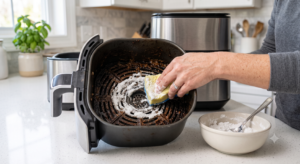
- Wash removable parts with warm water and mild dish soap.
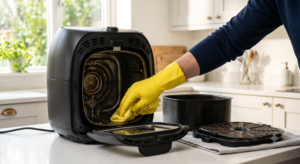
- Wipe the cooking chamber with a damp microfiber cloth.
- Remove crumbs from the bottom of the appliance.
- Check the exterior for grease or food splashes.
For a complete maintenance process, refer to your full guide on how to deep clean an air fryer.
Make Sure Every Part Is Completely Dry
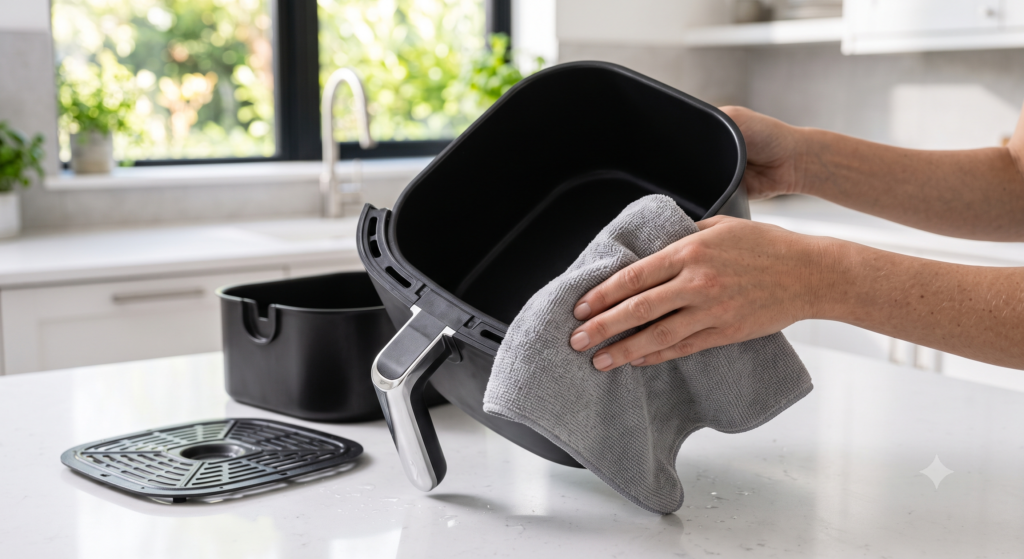
This is one of the most important storage rules.
Moisture trapped inside the basket, drawer, or cooking chamber can create musty odors. In poorly ventilated spaces, it may also encourage mold or corrosion on exposed metal components.
Before storage
- Dry the basket with a clean towel.
- Dry the drawer and crisper plate.
- Allow removable parts to air-dry if necessary.
- Wipe moisture from the interior.
- Check seams, corners, and handle joints.
Do not reassemble the appliance while water remains around the basket holes or underneath the crisper plate.
Countertop or Cabinet: Which Is Better?
Both options can work well. The best choice depends on how often you use the appliance and how much kitchen space you have.
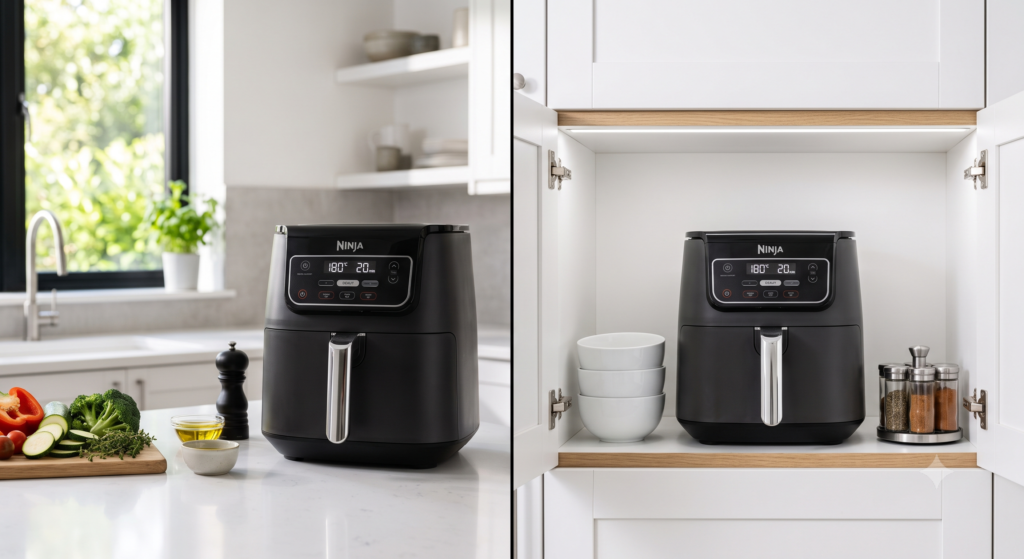
Storing an Air Fryer on the Countertop
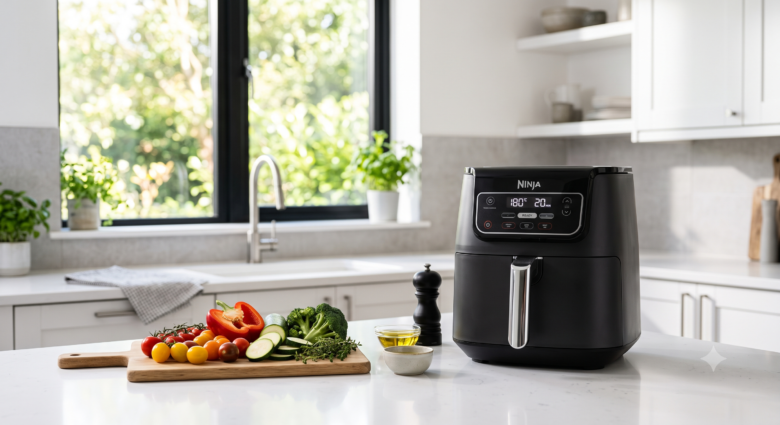
Countertop storage is ideal if you use the appliance several times per week.
Advantages
- Easy access
- No need to lift a heavy appliance
- Better ventilation
- Encourages frequent use
Best practices
- Keep it away from the sink.
- Avoid direct sunlight.
- Do not place it beside the stove.
- Leave space around the air vents.
- Keep the power cord safely behind the appliance.
- Use a clean, dry section of the counter.
Avoid placing decorative covers over the appliance until it is completely cool and dry.
Storing an Air Fryer in a Cabinet
Cabinet storage is useful if you have limited countertop space or use the air fryer occasionally.
Choose a cabinet that is
- Dry
- Clean
- Easy to access
- Strong enough to support the appliance
- Large enough to avoid squeezing the air fryer
Do not store it underneath a leaking sink or beside cleaning chemicals.
Before placing it inside, ensure the air fryer has fully cooled and dried.
If possible, select a lower cabinet to reduce the risk of dropping the appliance while lifting it.
How to Store the Basket and Drawer
The basket and drawer should be clean, dry, and correctly positioned.
You can either:
- Reinsert them into the air fryer
- Store them separately beside the appliance
If you reinsert them, avoid forcing the drawer tightly closed while moisture remains inside.
A useful approach is to leave the drawer slightly open for a short period after cleaning. Once everything is completely dry, close it normally to protect the interior from dust.
Do not stack heavy cookware inside the basket. This can scratch the non-stick coating or place pressure on the handle.
Protect the Non-Stick Coating
The basket is one of the most easily damaged parts of an air fryer.
During storage:
- Do not place metal utensils inside it.
- Avoid stacking pans or heavy accessories on top.
- Keep sharp objects away from the coating.
- Store accessories separately when possible.
- Use a soft liner between parts if stacking is unavoidable.
Even small scratches can make food more likely to stick and may reduce the basket’s usable life.
Store Accessories Carefully
Many air fryer owners collect accessories such as:
- Silicone liners
- Baking pans
- Grill racks
- Skewers
- Parchment liners
- Tongs
- Thermometers
Keep these items organized in a small container or drawer near the air fryer.
Do not overload the main basket with accessories during storage. Metal racks can scrape the surface if they move around.
Silicone liners should be clean and completely dry before being folded or stored.
Protect the Power Cord
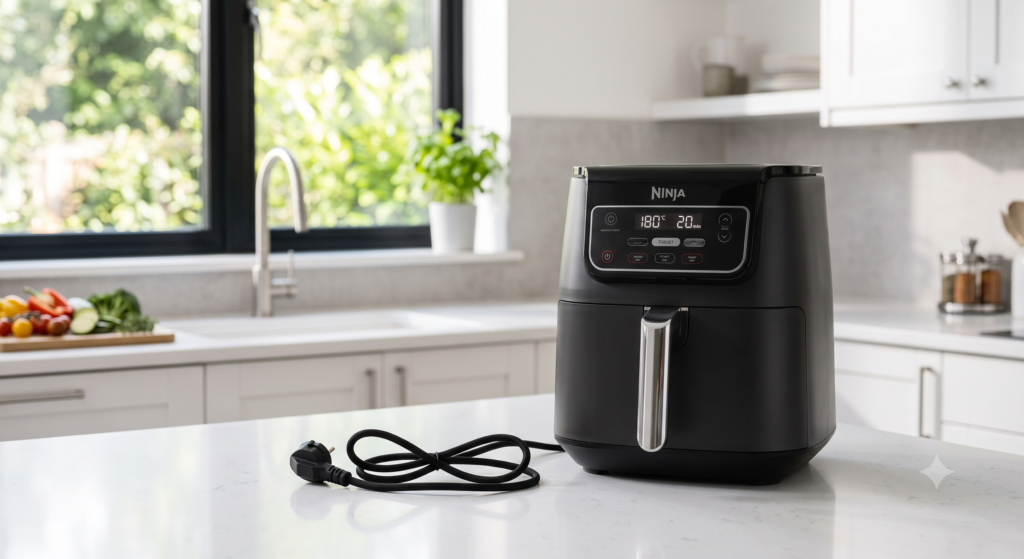
A damaged power cord can turn a convenient appliance into an electrical hazard.
Safe cord storage
- Unplug the appliance.
- Allow the cord to cool.
- Coil it loosely.
- Avoid sharp bends.
- Do not wrap it tightly around the air fryer.
- Keep the plug dry and clean.
If your model has built-in cord storage, use it according to the manufacturer’s instructions.
Never place the appliance on top of its own cord.
Avoid Humid Storage Areas
Air fryers contain electrical components that should be protected from moisture.
Avoid storing the appliance:
- Under the kitchen sink
- Beside a dishwasher vent
- Near a steaming kettle
- In a damp basement
- In an outdoor kitchen without weather protection
- Near an open window exposed to rain
Humidity can affect electronics and may encourage rust on exposed parts.
A dry cabinet or clean countertop is usually the safest location.
Keep the Air Vents Uncovered
Dust and grease can accumulate around the rear and side air vents.
During storage, make sure:
- The vents are not pressed against a wall.
- Plastic bags do not cover the appliance.
- Towels are not placed over ventilation openings.
- Dust is removed regularly.
If you use a dust cover, choose a breathable cover and only place it over a completely cool appliance.
Long-Term Storage
If you will not use the air fryer for several weeks or months, take extra precautions.
Step-by-step long-term storage
- Deep clean the appliance.
- Remove all grease and crumbs.
- Dry every part completely.
- Inspect the cord and plug.
- Reassemble the appliance loosely.
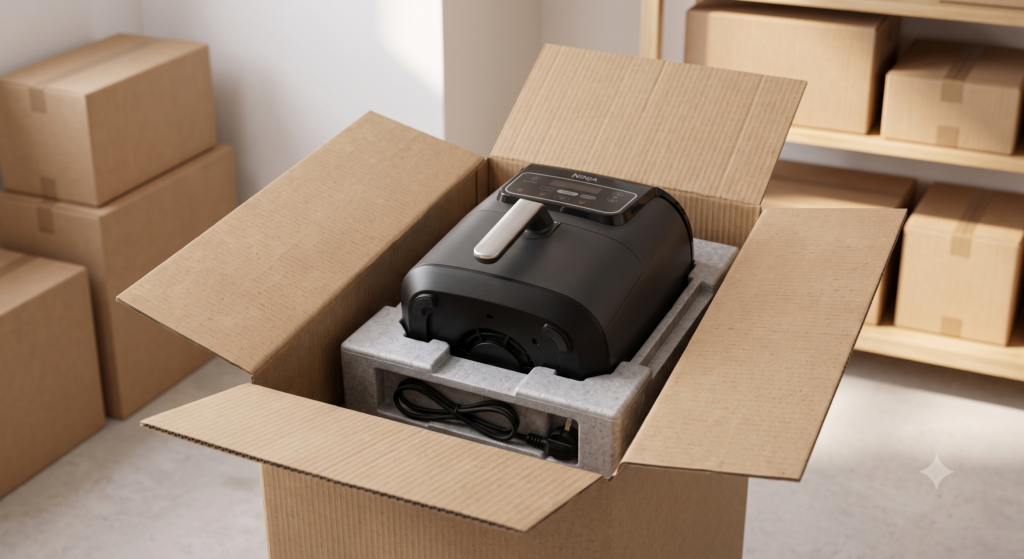
- Place it in its original box if available.
- Add clean packing material around the appliance.
- Store it in a dry, temperature-controlled location.
Do not use newspaper directly against greasy or non-stick surfaces because ink may transfer.
If storing the appliance in a box, label the box clearly and avoid placing heavy items on top.
Common Air Fryer Storage Mistakes
Several habits can gradually damage an air fryer.
Storing It While Still Warm
This traps heat and moisture inside cabinets.
Putting It Away While Damp
Moisture can create odors and affect metal or electrical components.
Wrapping the Cord Too Tightly
Repeated bending may damage the insulation or internal wires.
Storing Heavy Items in the Basket
Cookware and accessories can scratch the coating.
Keeping It Near Water
Splashes from the sink can enter vents or damage the plug.
Covering the Air Vents
Dust covers, plastic bags, and towels may trap moisture.
Lifting It by the Basket Handle
Always lift the appliance by its main body. The basket handle is not designed to support the full weight of the unit.
Frequently Asked Questions
Can I leave my air fryer on the counter all the time?
Yes, provided the location is clean, dry, stable, and away from water or direct heat. Leave enough space around the appliance for ventilation when it is in use.
Should I unplug my air fryer when storing it?
Yes. Unplugging the appliance reduces electrical risk and prevents accidental activation.
Can I store an air fryer inside a cabinet?
Yes, but only after it has cooled and dried completely. Make sure the cabinet is dry, strong, and large enough for the appliance.
Should the basket be left open during storage?
It can be left slightly open while drying. Once completely dry, it may be closed normally to reduce dust buildup.
Can I keep accessories inside the basket?
Lightweight, smooth accessories can be stored inside if they are clean and dry. Avoid sharp or heavy items that could damage the coating.
Is it safe to store an air fryer in a garage?
Only if the garage is dry, clean, temperature-controlled, and free from pests. Extreme heat, cold, or humidity can damage the appliance.
Keep Your Air Fryer Ready for Every Meal
Proper storage is a simple habit that protects your air fryer long after cooking is finished. Letting it cool, cleaning away grease, drying every part, protecting the cord, and choosing a dry storage location can prevent many avoidable problems.
Whether you keep it on the countertop or inside a cabinet, the goal is the same: protect the appliance from moisture, heat, dust, and physical damage.
A well-stored air fryer stays cleaner, smells fresher, and remains ready to deliver reliable results whenever you need a quick meal. Combined with regular cleaning and careful maintenance, proper storage can help your appliance remain a dependable part of your kitchen for years.