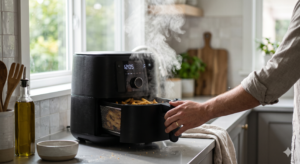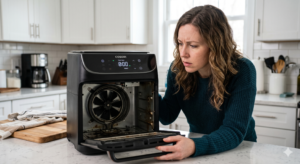
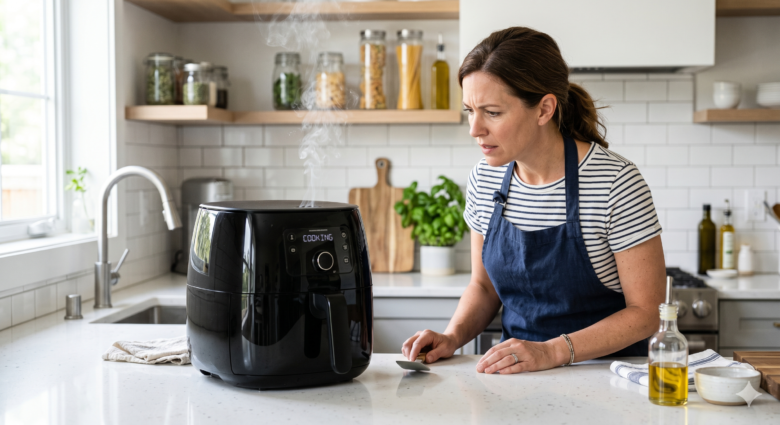
Seeing smoke coming from your air fryer can be alarming, especially if it happens unexpectedly during cooking. Many users immediately worry that their appliance is damaged or unsafe to use. Fortunately, in most cases, smoke coming from an air fryer is caused by simple issues that can be identified and fixed quickly.
Whether you’re cooking bacon, chicken wings, burgers, or vegetables, understanding why your air fryer is smoking can help you prevent future problems and keep your appliance working efficiently for years to come.
In this guide, you’ll learn the most common causes of air fryer smoke, how to fix them, and the best practices to keep your cooking experience safe and enjoyable.
Is It Normal for an Air Fryer to Smoke?
A small amount of smoke is not always a sign that something is wrong. Air fryers operate by circulating extremely hot air around food, often at temperatures between 350°F and 400°F (175°C to 200°C). When grease, oil, or food particles come into contact with hot surfaces, smoke can occur.
The key is identifying whether the smoke is occasional and harmless or a sign of a maintenance or mechanical issue.
Understanding Different Types of Air Fryer Smoke
White Smoke
White smoke is the most common type of smoke produced by air fryers.
It is usually caused by:
- Excess grease melting from food
- Oil dripping into the bottom of the basket
- Food residue burning during cooking
White smoke is generally not dangerous and can often be resolved through proper cleaning.
Blue Smoke
Blue smoke may indicate that oil is burning at extremely high temperatures.
Possible causes include the following:
- Excess cooking oil
- Oil residue on the heating element
- Food coated with too much oil
Black Smoke
Black smoke is more serious and should never be ignored.
It may indicate:
- Burned food particles
- Significant grease buildup
- Electrical or component problems
If black smoke appears, stop cooking immediately and inspect the appliance.
The Most Common Causes of Air Fryer Smoking
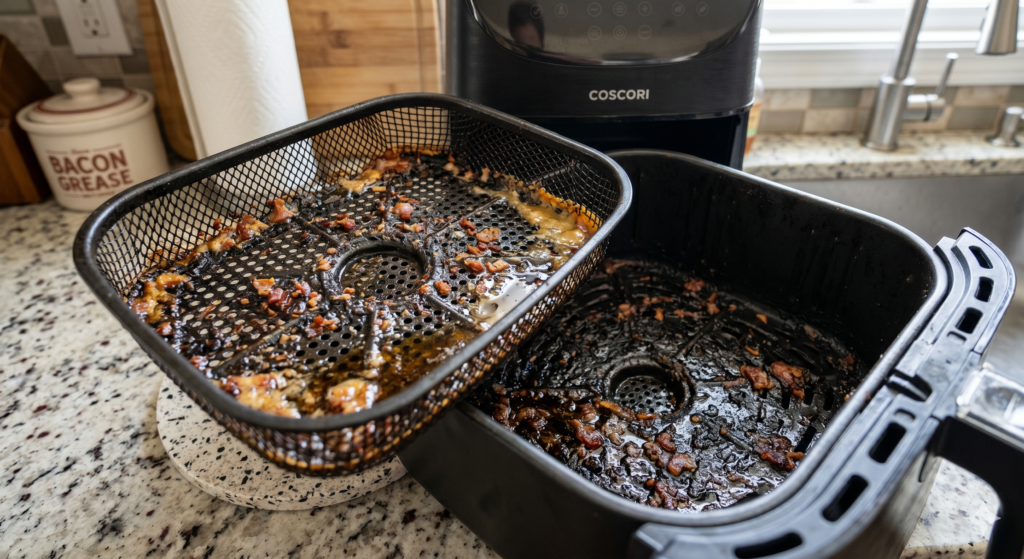
Excess Grease From Fatty Foods
One of the leading causes of air fryer smoke is cooking foods with a high fat content.
Examples include:
- Bacon
- Sausages
- Hamburgers
- Lamb chops
- Chicken thighs with skin
As the fat renders, it drips into the basket or drawer below. When the grease reaches high temperatures, it can begin to smoke.
How to Fix It
Try these simple solutions:
- Add a small amount of water to the drawer beneath the basket.
- Remove excess grease during cooking.
- Cook fatty foods at slightly lower temperatures.
- Clean the basket immediately after use.
Food Residue Left Behind
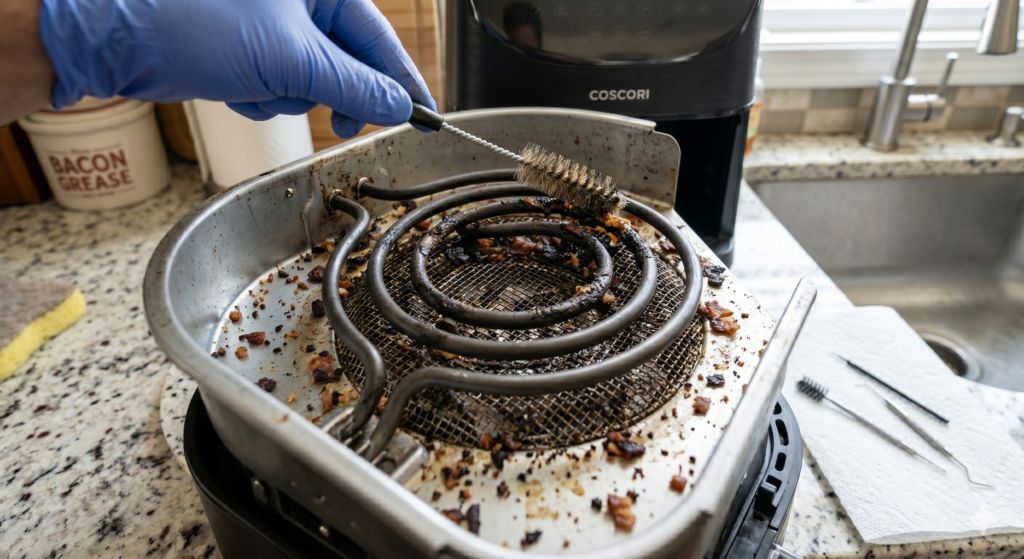
Tiny food particles often become trapped in the basket, tray, or heating area.
When these particles are exposed to high heat during the next cooking session, they burn and create smoke.
Common offenders include:
- Breadcrumbs
- Marinades
- Cheese
- Seasonings
- Bits of vegetables
How to Fix It
Follow this cleaning routine:
- Allow the air fryer to cool completely.
- Remove the basket and tray.
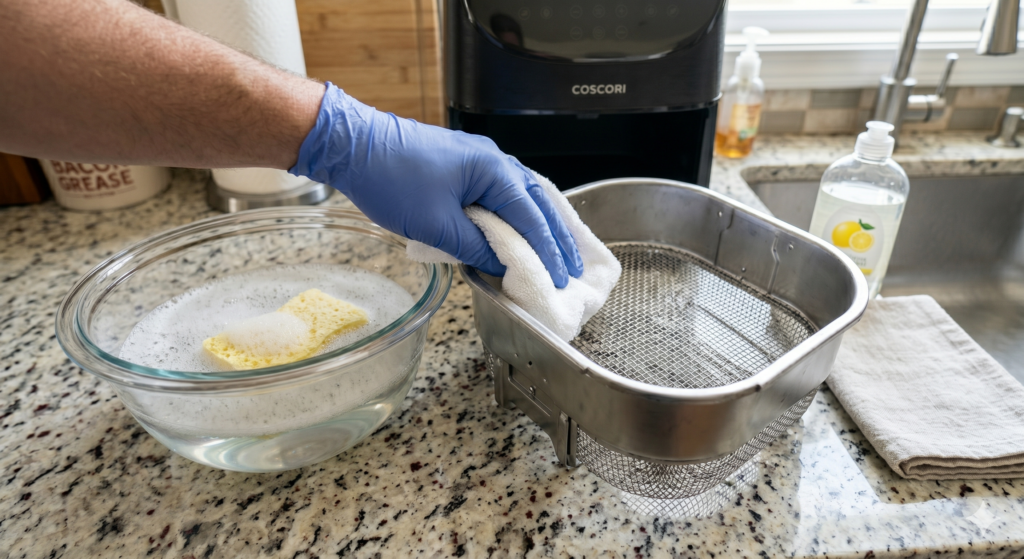
- Wash with warm soapy water.
- Wipe the interior with a soft cloth.
- Inspect the heating element for stuck debris.
Regular cleaning can eliminate many smoking issues before they start.
Using Too Much Oil
One of the biggest misconceptions about air fryers is that more oil creates better results.
In reality, excessive oil often causes smoking and can affect food texture.
A light coating is usually all that’s needed.
How to Fix It
Follow these guidelines:
- Use an oil sprayer instead of pouring oil directly.
- Apply oil sparingly.
- Avoid aerosol sprays that may leave residue.
- Use oils with a high smoke point.
Good choices include:
- Avocado oil
- Canola oil
- Vegetable oil
- Peanut oil
Oil Reaching the Heating Element
When oil splatters upward during cooking, it can reach the heating element located at the top of the air fryer.
Once heated, the oil burns and produces smoke.
This issue is particularly common when cooking:
- Bacon
- Chicken wings
- Burgers
- Marinated meats
How to Fix It
- Avoid overcrowding the basket.
- Pat foods dry before cooking.
- Trim excess fat when possible.
- Use recommended cooking temperatures.
Overcrowding the Basket
Many users attempt to cook large quantities of food at once.
While this may seem efficient, overcrowding creates several problems:
- Reduced airflow
- Uneven cooking
- Increased splatter
- More smoke production
The air fryer relies on unrestricted air circulation to cook food properly.
How to Fix It
For best results:
- Arrange food in a single layer.
- Cook in batches if necessary.
- Leave space between food items.
Proper airflow reduces both smoke and cooking time.
Dirty Heating Element
The heating element is often overlooked during routine cleaning.
Over time, grease and food particles can accumulate on its surface.
When heated repeatedly, this buildup begins to burn and smoke.
How to Clean the Heating Element
Step 1: Unplug the air fryer.
Step 2: Allow it to cool completely.
Step 3: Turn the appliance upside down if recommended by the manufacturer.
Step 4: Use a soft brush to loosen debris.
Step 5: Wipe gently with a damp cloth.
Never use abrasive tools that could damage the element.
Wrong Cooking Temperature
Cooking food at temperatures higher than necessary can cause oils and fats to exceed their smoke point.
This often leads to:
- Excessive smoke
- Burnt food
- Bitter flavors
How to Fix It
Always follow recommended cooking temperatures.
Examples:
| Food | Recommended Temperature |
|---|---|
| Chicken Wings | 380°F |
| French Fries | 375°F |
| Salmon | 390°F |
| Vegetables | 370°F |
| Bacon | 350°F |
Lower temperatures often produce cleaner cooking results while reducing smoke.
Step-by-Step Guide When Your Air Fryer Starts Smoking
If your air fryer suddenly begins smoking, follow these steps:
Step 1: Turn Off the Air Fryer
Stop the cooking cycle immediately.
Step 2: Unplug the Appliance
Disconnect it from power for safety.
Step 3: Allow It to Cool
Wait until all components are cool enough to handle.
Step 4: Inspect the Basket
Look for grease buildup, food debris, or burnt particles.
Step 5: Check the Heating Element
Inspect for splattered oil or stuck food.
Step 6: Clean Thoroughly
Wash removable parts and wipe interior surfaces.
Step 7: Test With a Small Food Batch
Cook a simple item such as bread or vegetables to determine whether the issue is resolved.
How to Prevent Air Fryer Smoke in the Future
Prevention is always easier than troubleshooting.
Follow these habits to keep your air fryer smoke-free:
Clean After Every Use
Even small food particles can create smoke during the next cooking session.
Use Minimal Oil
Air fryers require far less oil than traditional frying methods.
Avoid Overcrowding
Proper airflow is essential for clean and efficient cooking.
Trim Excess Fat
Reducing unnecessary fat minimizes grease accumulation.
Inspect the Heating Element Regularly
A quick monthly inspection can prevent long-term buildup.
When Should You Replace Your Air Fryer?
While most smoking issues are maintenance-related, some situations may indicate a more serious problem.
Consider replacing your air fryer if:
- Smoke appears despite thorough cleaning.
- You notice burning electrical odors.
- The appliance no longer heats properly.
- Internal components appear damaged.
- The unit repeatedly trips electrical circuits.
These symptoms may indicate wear or electrical faults that require professional attention.
Keep Cooking With Confidence
A smoking air fryer doesn’t automatically mean your appliance is broken. In most cases, the culprit is excess grease, leftover food residue, too much oil, or simple cleaning oversights. By understanding how smoke develops and taking a few preventive measures, you can enjoy safer cooking, better-tasting meals, and a longer lifespan for your appliance.
The next time you notice smoke drifting from your air fryer, you’ll know exactly what to look for and how to solve the problem quickly. A few minutes of maintenance today can save hours of frustration tomorrow, allowing you to get back to what matters most—creating delicious, crispy meals with confidence.