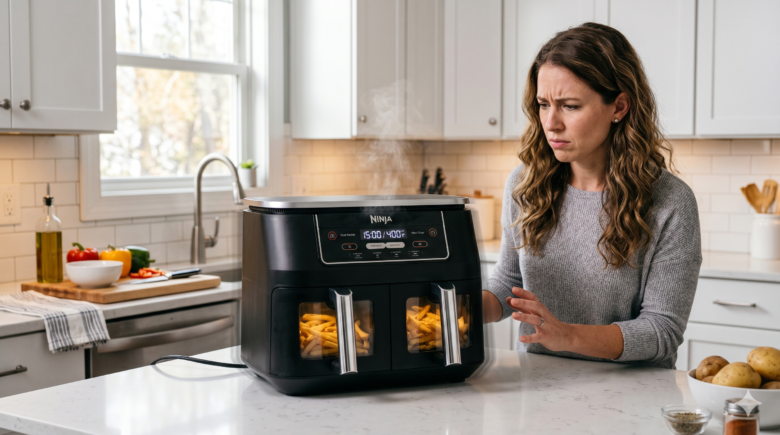
Air fryers are known for convenience, speed, and crispy cooking results. While these appliances naturally produce some sound during operation, unusual noises can quickly become concerning. A rattling basket, loud buzzing, excessive vibration, or unexpected grinding sound may leave you wondering whether your air fryer is malfunctioning.
The good news is that not every noise indicates a serious problem. Many air fryer sounds are caused by simple issues such as loose components, food placement, debris buildup, or improper positioning. In some cases, however, unusual noises can signal a worn fan motor or internal mechanical issue that requires attention.
This guide explains the most common reasons an air fryer may become noisy, how to identify the source of the sound, and what steps you can take to restore quieter operation.
Is It Normal for an Air Fryer to Make Noise?
Yes, some noise is completely normal.
Air fryers rely on powerful fans to circulate hot air at high speeds. This airflow is what creates the crispy texture that makes air fryers so popular.
Normal sounds may include:
- Fan operation
- Air circulation
- Timer alerts
- Occasional clicking sounds
However, certain noises deserve closer attention.
These include:
- Loud rattling
- Grinding
- Excessive buzzing
- Vibrating sounds
- Metal scraping noises
If your air fryer suddenly becomes much louder than usual, troubleshooting may be necessary.
1. Loose Basket Components
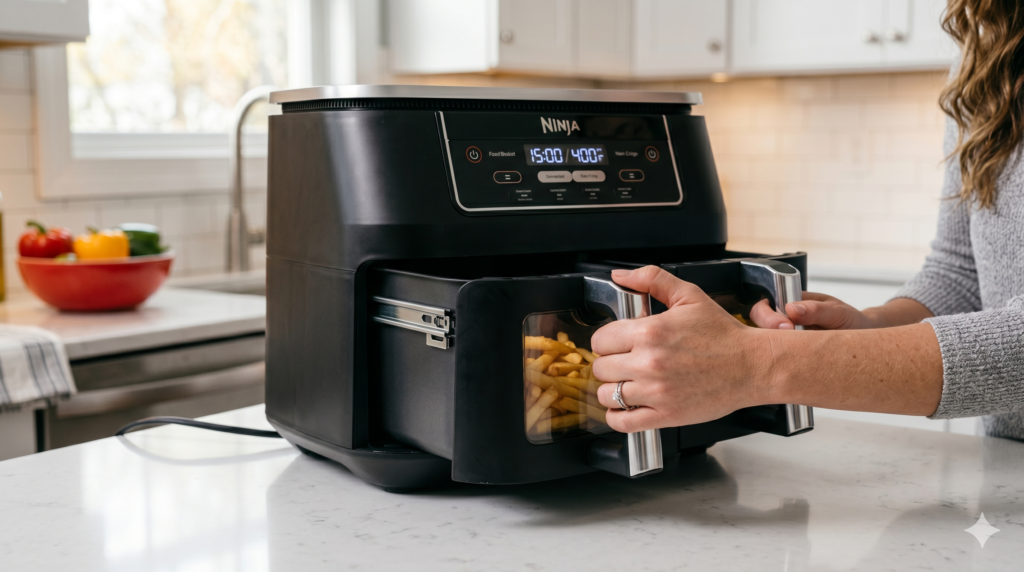
One of the most common causes of noise is a basket that isn’t fully secured.
The basket and drawer are designed to fit tightly within the appliance. If they become loose, vibration may occur during cooking.
Signs This Is the Problem
- Rattling during operation
- Noise changes when touching the basket
- Sound disappears when pressure is applied
How to Fix It
- Remove the basket completely.
- Inspect it for damage.
- Reinsert it firmly.
- Ensure all locking mechanisms engage properly.
A properly seated basket often eliminates rattling immediately.
2. Food Touching the Fan Area
Large or lightweight foods can sometimes move during cooking.
When food comes into contact with the air circulation system, unusual noises may occur.
Common Examples
- Parchment paper lifting upward
- Lightweight vegetables
- Loose foil
- Oversized food items
How to Fix It
- Secure liners properly.
- Avoid using excessive parchment paper.
- Cut larger foods into smaller portions.
- Keep food below the maximum fill line.
Maintaining proper clearance helps prevent contact with internal components.
3. Overcrowding the Basket
An overloaded basket can cause food items to move unpredictably during cooking.
This movement may create rattling or vibration noises.
Additional Problems Caused by Overcrowding
- Uneven cooking
- Reduced airflow
- Longer cooking times
- Increased strain on the fan
How to Fix It
Cook in smaller batches whenever possible.
Allow sufficient space for hot air to circulate freely around the food.
4. Uneven Surface Placement
Air fryers are designed to operate on flat, stable surfaces.
If the appliance sits unevenly, vibration can become amplified.
Signs of Surface Problems
- Appliance rocks slightly
- Noise changes when repositioned
- Vibration felt through the countertop
How to Fix It
- Move the air fryer to a level surface.
- Check that all feet contact the countertop evenly.
- Avoid unstable carts or folding tables.
A stable foundation often reduces noise significantly.
5. Grease and Debris Buildup
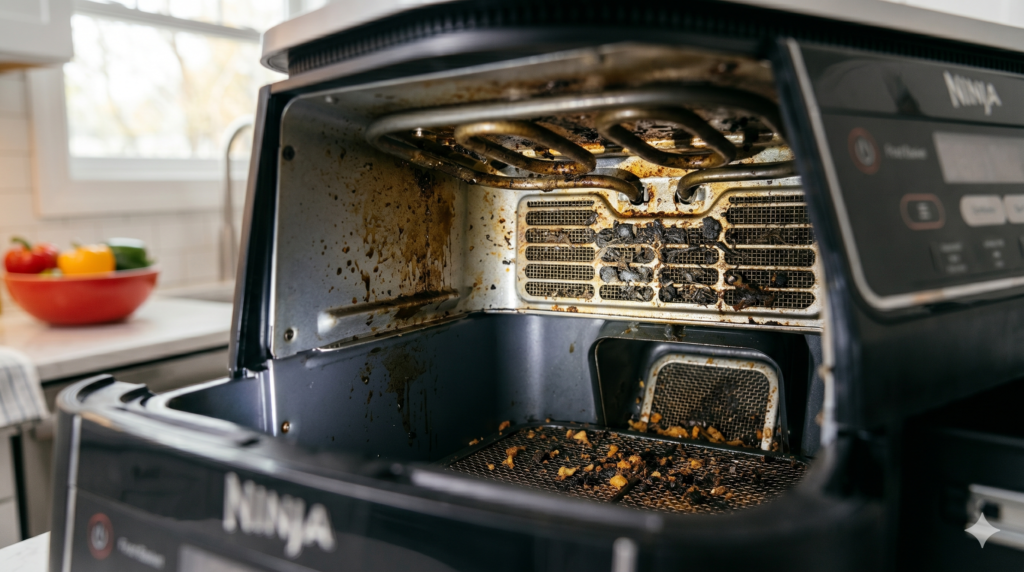
Over time, grease and food particles can accumulate inside the appliance.
This buildup may affect airflow and create unusual sounds.
Common Areas for Buildup
- Fan housing
- Air vents
- Basket perforations
- Heating element area
Symptoms
- Buzzing noises
- Reduced airflow
- Smoke during cooking
- Poor performance
How to Fix It
Perform a thorough cleaning:
- Unplug the appliance.
- Allow it to cool.
- Remove the basket and tray.
- Clean all removable parts.
- Inspect the interior carefully.
Regular maintenance prevents many noise-related issues.
6. Loose Internal Components
After extended use, internal screws or mounting brackets may become loose.
These components can vibrate when the fan operates.
Warning Signs
- Metallic rattling
- Noise increases with fan speed
- Sound originates inside the appliance
What You Should Do
Avoid disassembling the appliance unless recommended by the manufacturer.
If the noise persists, contact customer support or a qualified technician.
7. Worn Fan Motor
The fan motor is one of the hardest-working components in an air fryer.
Over time, wear can affect its performance.
Signs of Fan Motor Problems
- Loud humming
- Grinding noises
- Inconsistent airflow
- Sudden increases in operating volume
Is It Dangerous?
Not always, but it can indicate that the motor is nearing the end of its lifespan.
Recommended Action
If cleaning doesn’t resolve the issue, professional inspection may be necessary.
8. Manufacturing Defects
Although uncommon, some air fryers leave the factory with defects.
These issues may not become noticeable until the appliance is used repeatedly.
Possible Defects
- Misaligned fans
- Loose internal parts
- Defective bearings
- Poor assembly
What to Do
If your air fryer has been noisy since the day you purchased it, contact the manufacturer regarding warranty coverage.
9. Loose Accessories
Accessories can sometimes create noise that appears to come from the appliance itself.
Examples
- Rack inserts
- Skewers
- Baking pans
- Silicone liners
How to Fix It
Remove accessories one at a time and test the air fryer.
This helps identify whether an accessory is responsible for the noise.
Step-by-Step Troubleshooting Guide
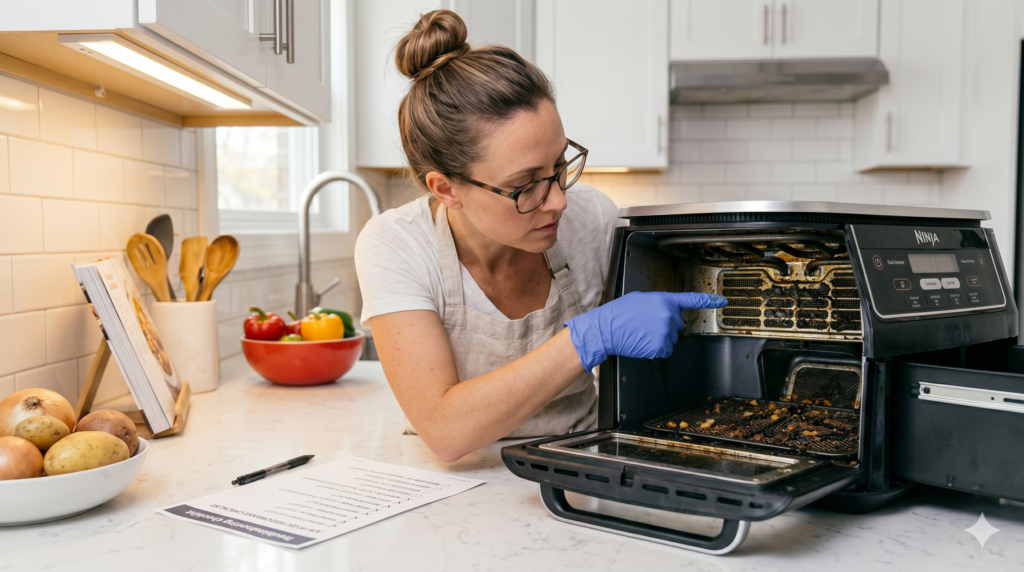
If your air fryer is making unusual sounds, follow this checklist.
Step 1: Turn Off the Appliance
Stop cooking and allow the unit to cool.
Step 2: Remove the Basket
Inspect for damage or improper installation.
Step 3: Check Food Placement
Ensure food is not contacting internal components.
Step 4: Clean the Appliance
Remove grease, crumbs, and debris.
Step 5: Inspect Accessories
Temporarily remove inserts and racks.
Step 6: Verify Surface Stability
Place the appliance on a flat countertop.
Step 7: Restart and Test
Run the air fryer empty for several minutes.
Step 8: Monitor the Noise
Determine whether the sound has improved or remained unchanged.
Following these steps often resolves the majority of noise complaints.
When Should You Stop Using Your Air Fryer?
Most noise issues are harmless.
However, certain sounds should never be ignored.
Stop Using the Appliance If You Notice:
- Grinding metal sounds
- Electrical burning odors
- Visible sparks
- Smoke from vents
- Excessive vibration
- Sudden fan failure
These symptoms may indicate a more serious internal problem.
How to Prevent Air Fryer Noise Problems
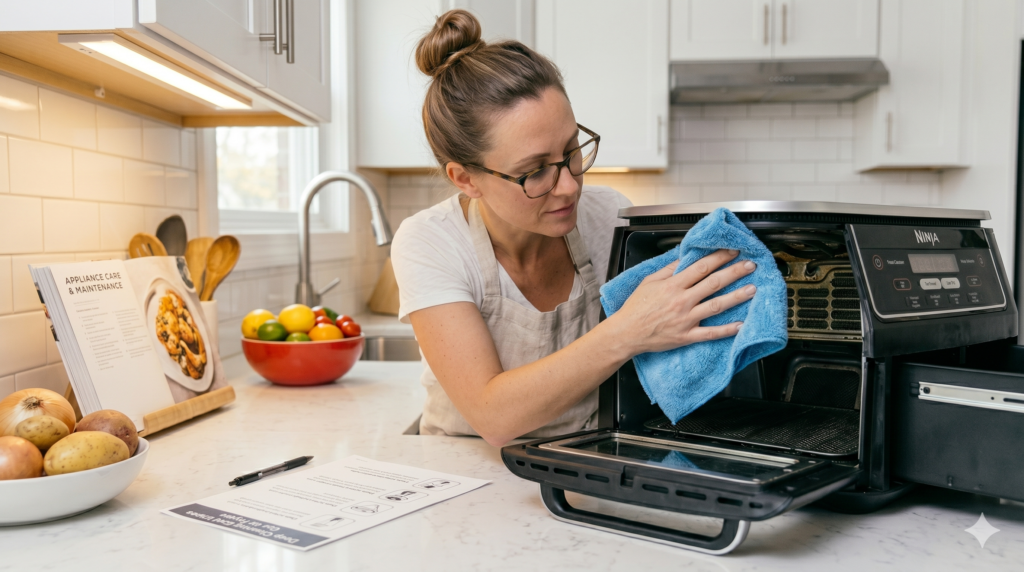
A few simple habits can keep your air fryer operating smoothly.
Clean After Every Use
Grease buildup is a leading cause of airflow-related noise.
Avoid Overloading
Excessive food weight increases strain on components.
Handle the Basket Carefully
Rough handling may loosen locking mechanisms over time.
Use Accessories Correctly
Only use accessories designed for your specific air fryer model.
Inspect Regularly
Routine inspections help identify wear before it becomes a major issue.
Can Air Fryer Noise Affect Performance?
In some cases, yes.
A noisy air fryer may indicate airflow restrictions or mechanical wear that can affect cooking quality.
Potential consequences include:
- Uneven cooking
- Longer cooking times
- Reduced crispiness
- Increased energy consumption
Addressing unusual noises early can help maintain optimal performance.
Enjoy Quieter Cooking and Better Results
A loud air fryer doesn’t automatically mean something is broken. In many situations, the source of the noise is surprisingly simple—a loose basket, overcrowded food, poor placement, or accumulated debris. Taking a few minutes to inspect, clean, and properly position your appliance can often restore quiet operation and improve cooking performance at the same time.
The key is learning to recognize the difference between normal operating sounds and noises that signal a potential problem. With regular maintenance and a systematic troubleshooting approach, you can keep your air fryer running efficiently, safely, and quietly for years to come. The next time you hear an unexpected rattle or buzz, you’ll know exactly where to start and how to get back to preparing delicious meals with confidence.