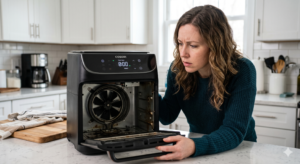

Few kitchen appliances are as convenient as an air fryer. With the ability to cook crispy, delicious meals in less time and with less oil, it has become a staple in many homes. But when your air fryer suddenly stops heating up, meal preparation can quickly turn into frustration.
The good news is that an air fryer that isn’t heating properly doesn’t always mean the appliance is broken. In many cases, the issue is caused by a simple setting, maintenance oversight, or safety feature that can be corrected in minutes.
This guide explores the most common reasons why an air fryer may stop heating, how to troubleshoot the problem, and what you can do to get back to cooking your favorite meals.
How to Tell If Your Air Fryer Isn’t Heating Properly
Before jumping into repairs, it’s important to confirm that the appliance is truly not heating.
Common signs include:
- Food remains raw after cooking.
- The fan runs, but no heat is produced.
- Cooking times suddenly become much longer.
- The air fryer powers on but stays cold.
- Food cooks unevenly or not at all.
If you notice one or more of these symptoms, one of the following issues may be responsible.
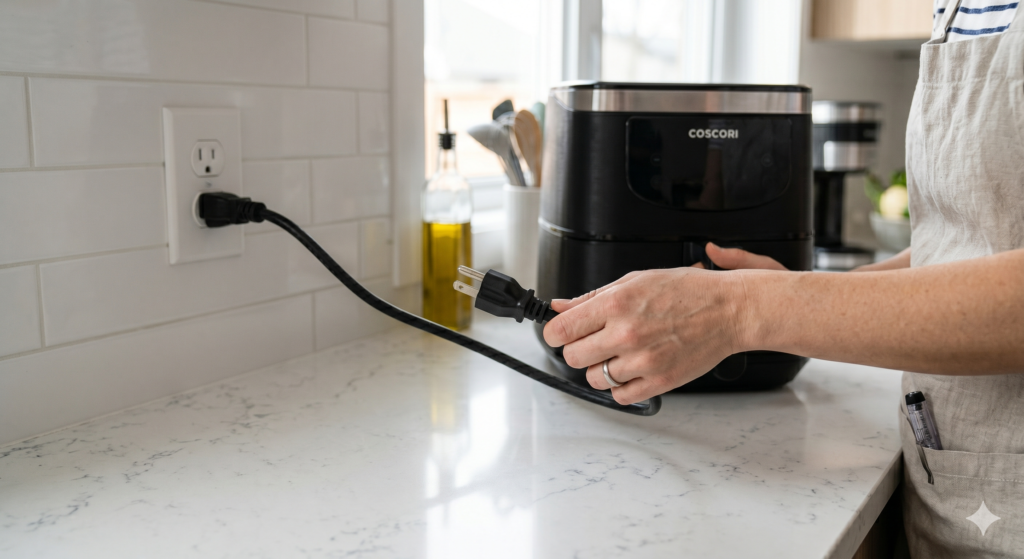
1. The Air Fryer Is Not Plugged In Correctly
It may sound obvious, but power-related issues are one of the most common causes of heating problems.
A loose power cord or faulty outlet can prevent the heating element from receiving electricity.
How to Fix It
- Unplug the air fryer.
- Inspect the power cord for damage.
- Plug the appliance directly into a wall outlet.
- Test the outlet with another appliance.
- Avoid using overloaded extension cords.
If the outlet is functioning properly, move on to the next step.
2. The Basket Is Not Inserted Properly
Many air fryers include built-in safety mechanisms that prevent heating when the basket is not fully seated.
Even a slightly misaligned basket can stop the appliance from operating correctly.
How to Fix It
- Remove the basket completely.
- Reinsert it firmly until it clicks into place.
- Check for food debris that may prevent proper alignment.
Always ensure the basket is fully secured before starting a cooking cycle.
3. Incorrect Temperature Settings
Sometimes the appliance is heating, but not enough to cook food effectively.
This can happen if the temperature has been accidentally lowered or changed.
How to Fix It
Verify the selected temperature before cooking.
Recommended temperatures include:
| Food | Temperature |
|---|---|
| French Fries | 375°F |
| Chicken Wings | 380°F |
| Vegetables | 370°F |
| Fish Fillets | 390°F |
| Frozen Snacks | 400°F |
Using the correct temperature helps ensure efficient cooking and consistent results.
4. The Timer Has Not Been Set
Many air fryers require both a temperature and a timer to begin heating.
If the timer is set incorrectly or not activated, the heating element may never engage.
How to Fix It
- Check the timer settings.
- Reset the cooking cycle.
- Start a new program with both temperature and time selected.
This simple step solves more issues than many users realize.
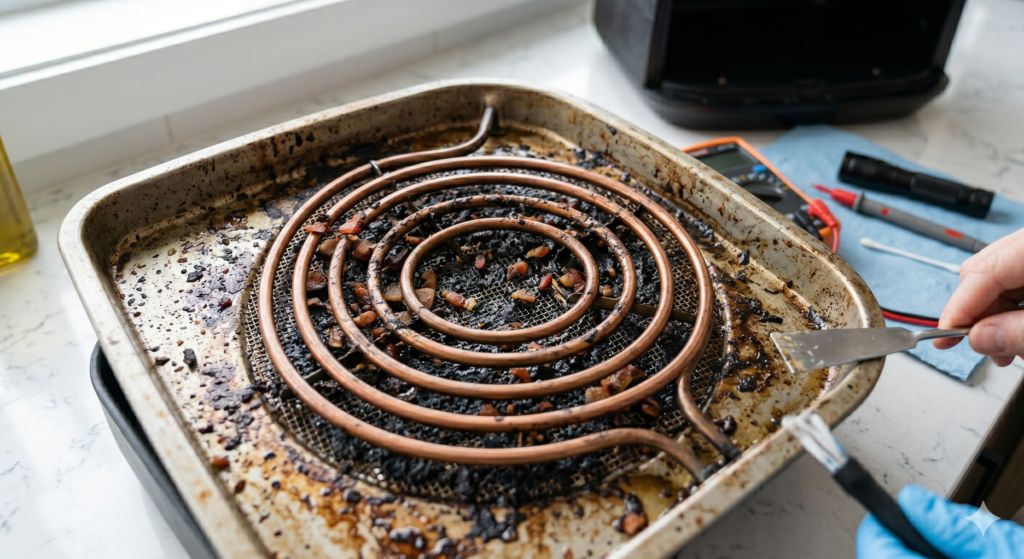
5. The Heating Element Is Dirty
Grease, oil, and food particles can accumulate on the heating element over time.
This buildup may reduce heating efficiency and, in severe cases, prevent the element from operating properly.
Signs of a Dirty Heating Element
- Reduced cooking performance
- Smoke during cooking
- Uneven heating
- Burnt odors
How to Fix It
- Unplug the appliance.
- Allow it to cool completely.
- Inspect the heating element.
- Remove debris using a soft brush.
- Wipe carefully with a damp cloth.
Regular cleaning helps maintain optimal performance.
6. Overheating Protection Has Activated
Most modern air fryers include thermal protection systems designed to prevent damage.
If the appliance overheats, the safety mechanism may temporarily disable heating until temperatures return to normal.
How to Fix It
- Turn off the appliance.
- Unplug it for 20 to 30 minutes.
- Allow it to cool completely.
- Restart the air fryer.
In many cases, normal operation will resume once the unit cools.
7. Damaged Heating Element
The heating element is responsible for generating the hot air that cooks food.
If it becomes damaged, broken, or worn out, the appliance may stop producing heat entirely.
Signs of a Faulty Heating Element
- No heat despite normal operation
- Visible damage or discoloration
- Intermittent heating
- Extended cooking times
What to Do
Unfortunately, heating element replacement often requires professional repair or replacement of the appliance.
Consult the manufacturer’s support team if your unit is still under warranty.
8. Faulty Temperature Sensor
Air fryers rely on sensors to monitor and regulate internal temperatures.
If a sensor malfunctions, the appliance may incorrectly detect temperature levels and fail to activate heating.
Symptoms
- Erratic temperature behavior
- Food consistently undercooked
- Heating starts and stops unexpectedly
Solution
Sensor issues typically require manufacturer servicing or replacement parts.
If your air fryer displays an error code, consult the user manual for guidance.
9. Control Panel Problems
Modern digital air fryers depend on electronic control boards to manage cooking functions.
A malfunctioning control panel can prevent the heating system from receiving instructions.
Common Symptoms
- Buttons do not respond
- Display errors
- Random shutdowns
- Temperature settings not changing
How to Fix It
Try performing a reset:
- Unplug the appliance.
- Wait five minutes.
- Plug it back in.
- Restart the cooking cycle.
If the issue continues, professional repair may be necessary.
10. Internal Electrical Failure
In rare cases, internal electrical components may fail due to age, manufacturing defects, or power surges.
Potential issues include:
- Faulty wiring
- Burned connections
- Damaged control boards
- Failed relays
Warning Signs
- Burning smells
- Sparks
- Repeated circuit breaker trips
- Complete loss of function
If you suspect an electrical problem, stop using the appliance immediately and contact the manufacturer or a qualified technician.
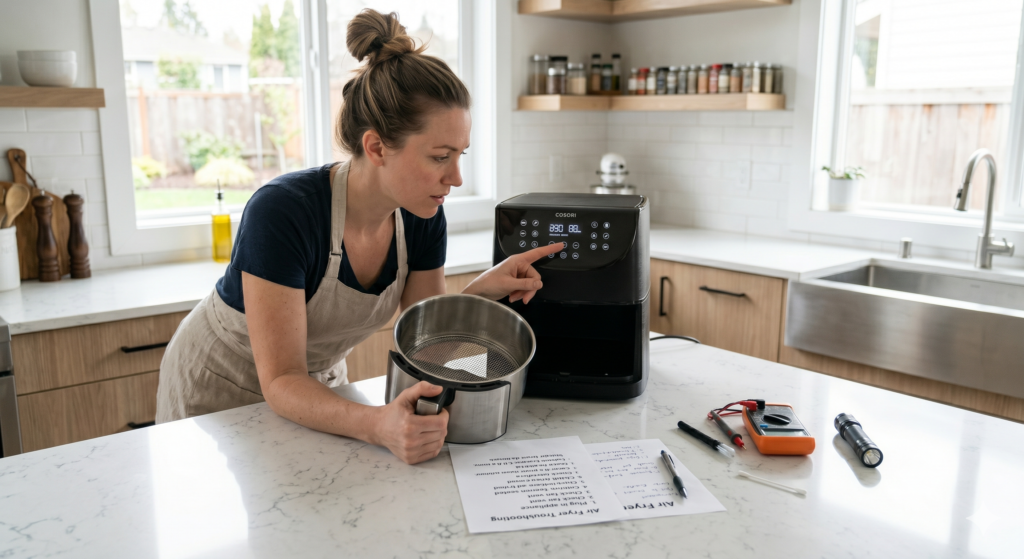
Step-by-Step Troubleshooting Checklist
When your air fryer stops heating, follow this process before considering replacement.
Step 1
Verify the power source.
Step 2
Check that the basket is properly inserted.
Step 3
Confirm the timer and temperature settings.
Step 4
Inspect and clean the heating element.
Step 5
Allow the appliance to cool and reset.
Step 6
Look for visible damage or error messages.
Step 7
Consult the user manual.
Step 8
Contact customer support if the problem persists.
Following these steps can often resolve the issue without costly repairs.
How to Prevent Future Heating Problems
A little maintenance goes a long way toward extending the life of your air fryer.
Clean After Every Use
Remove grease and food particles before they accumulate.
Avoid Overcrowding
Proper airflow improves cooking performance and reduces strain on components.
Use Recommended Temperatures
Cooking at excessively high temperatures may shorten component lifespan.
Inspect the Power Cord
Check regularly for wear or damage.
Store Properly
Keep the appliance in a dry, clean environment when not in use.
When Is It Time to Replace Your Air Fryer?
While many heating issues can be fixed, some situations justify replacement.
Consider a new air fryer if:
- The appliance is several years old.
- Repair costs exceed replacement value.
- Electrical problems continue recurring.
- Multiple components have failed.
- Safety concerns arise during operation.
Modern air fryers are often more energy-efficient and include improved safety features, making an upgrade worthwhile when repairs become impractical.
Get Back to Crispy, Perfectly Cooked Meals
An air fryer that won’t heat up can feel like a major inconvenience, but most problems have straightforward solutions. From checking the power source and basket placement to cleaning the heating element and resetting the appliance, a systematic approach can often restore normal operation quickly.
By understanding how your air fryer works and performing regular maintenance, you can prevent many common issues before they start. A few minutes spent troubleshooting today could save you the expense of unnecessary repairs and help ensure that your favorite crispy meals are never far away.