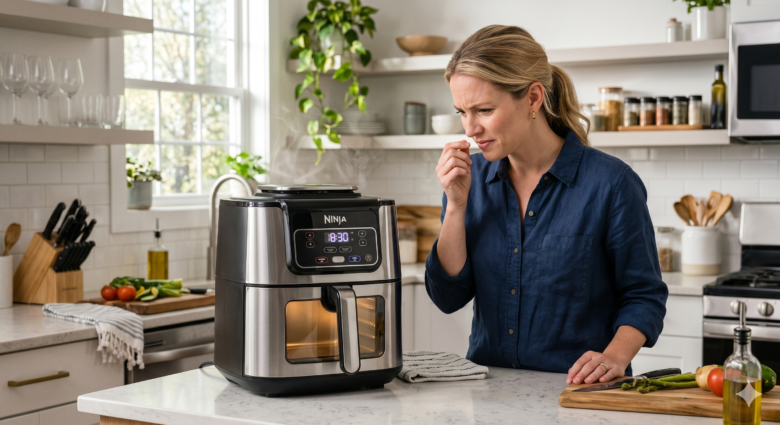
Few things are more disappointing than preparing to cook your favorite meal in a new air fryer only to notice a strong plastic smell filling the kitchen. Whether you’ve just unboxed your appliance or have been using it for a while, unusual odors can be concerning and may leave you wondering whether your air fryer is safe to use.
The good news is that a plastic smell doesn’t always indicate a serious problem. In many cases, the odor is temporary and can be eliminated with a few simple steps. However, there are situations where unusual smells may point to overheating components, poor maintenance, or even a manufacturing defect.
This guide explains why an air fryer may smell like plastic, how to remove the odor, and when it’s time to stop using the appliance and seek professional assistance.
Is It Normal for a New Air Fryer to Smell Like Plastic?
Yes, it is fairly common for a brand-new air fryer to produce a plastic or chemical smell during its first few uses.
Manufacturers often apply protective coatings to internal components during production and shipping. When the appliance is heated for the first time, these coatings may burn off, creating an odor that resembles plastic or chemicals.
In most cases, the smell gradually disappears after several cooking cycles.
However, if the odor becomes stronger, persists for weeks, or is accompanied by smoke, further investigation is necessary.
1. Manufacturing Residue
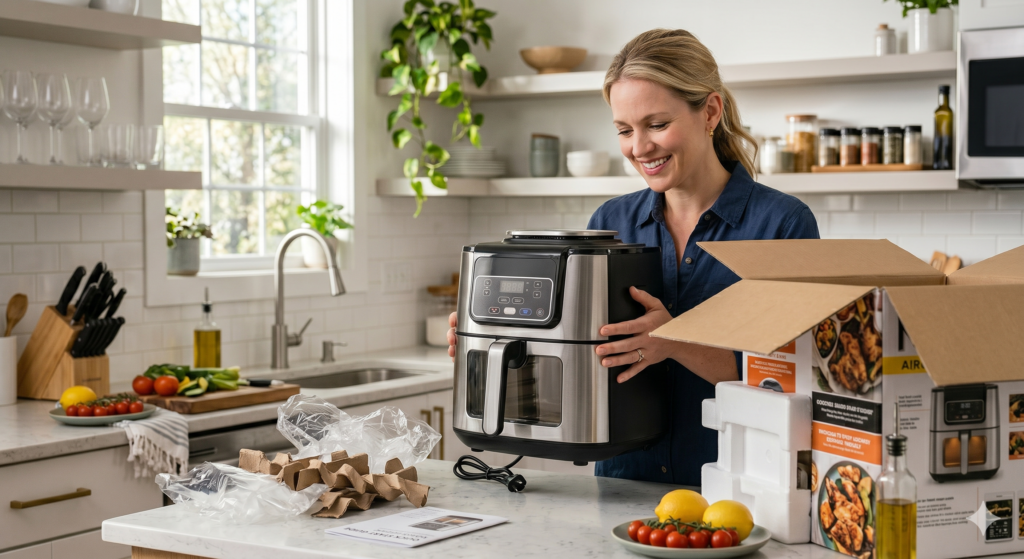
During production, air fryers may collect dust, oils, or residue from the manufacturing process.
These substances are harmless but can produce odors when exposed to high temperatures.
Signs This Is the Cause
- The air fryer is brand new.
- The smell appears during the first few uses.
- No visible smoke is present.
- The odor gradually decreases over time.
How to Fix It
Before using a new air fryer:
- Remove all packaging materials.
- Wash the basket and tray with warm soapy water.
- Wipe the interior with a damp cloth.
- Run the air fryer empty for 10 to 15 minutes at 400°F (200°C).
This process helps burn off manufacturing residue and reduce odors.
2. Protective Coatings Burning Off
Some air fryer components are treated with protective coatings designed to prevent damage during storage and transportation.
When heated for the first time, these coatings can create a noticeable smell.
Is It Dangerous?
Generally, no.
As long as the smell decreases after a few uses and there is no visible damage or smoke, the appliance is typically functioning as intended.
How Long Does It Last?
Most users notice significant improvement after two to five cooking sessions.
3. Packaging Materials Left Inside
It may sound obvious, but many first-time users accidentally leave protective materials inside the appliance.
These materials can include:
- Plastic film
- Foam inserts
- Packaging tape
- Cardboard spacers
When exposed to heat, they can create strong plastic odors and potentially pose a safety risk.
How to Fix It
Carefully inspect:
- The basket
- The drawer
- The cooking chamber
- The heating element area
Remove any remaining packaging before operating the air fryer.
4. Plastic Components Overheating
Air fryers contain plastic components designed to withstand normal cooking temperatures.
However, if a component is defective or positioned incorrectly, overheating can occur.
Warning Signs
- Strong burning plastic smell
- Odor becoming worse over time
- Visible discoloration
- Melted plastic parts
What to Do
Stop using the appliance immediately.
Inspect visible components and contact the manufacturer if damage is suspected.
5. Food Residue and Grease Buildup
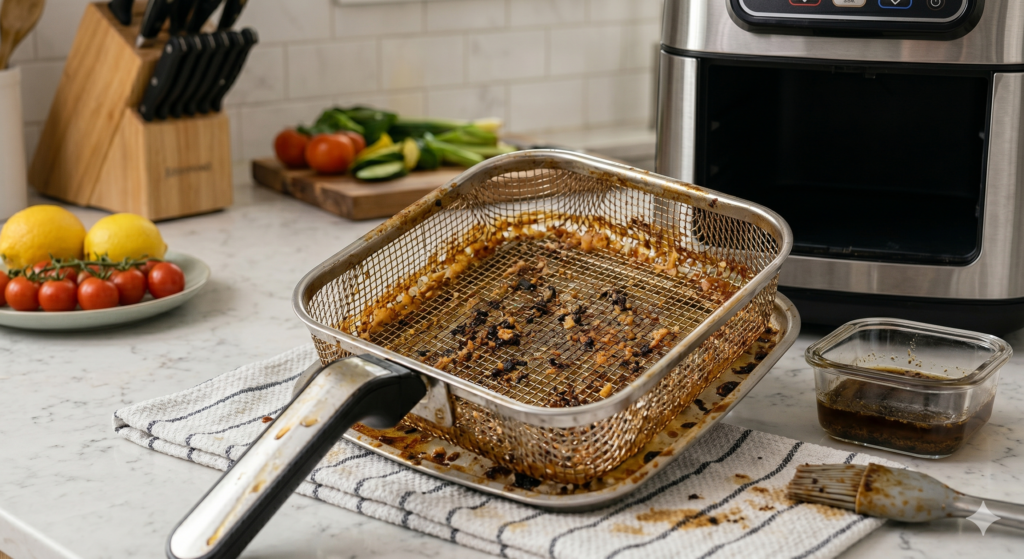
Not all unpleasant smells originate from plastic.
Old food particles and grease residue can create odors that resemble burnt plastic when exposed to high heat.
Common Sources
- Grease trapped beneath the basket
- Burned crumbs
- Leftover marinades
- Charred food particles
How to Fix It
Clean the air fryer thoroughly after every use.
Pay special attention to:
- Basket
- Drawer
- Heating element
- Air vents
Regular cleaning prevents odors and improves cooking performance.
6. Poor Cleaning Habits
Even if food residue isn’t immediately visible, oils can accumulate over time.
Repeated heating causes these oils to break down and produce unpleasant smells.
Signs of Poor Maintenance
- Persistent odors
- Smoke during cooking
- Sticky surfaces
- Reduced cooking efficiency
Best Cleaning Practices
- Wash removable parts after each use.
- Wipe the interior weekly.
- Inspect the heating element regularly.
- Avoid harsh, abrasive cleaners.
Proper maintenance is one of the simplest ways to prevent odor problems.
7. Low-Quality Cooking Oils
Certain cooking oils have lower smoke points than others.
When heated beyond their limits, they can produce odors that resemble plastic or chemicals.
Oils More Likely to Cause Problems
- Unrefined olive oil
- Butter sprays
- Some aerosol cooking sprays
Better Alternatives
- Avocado oil
- Canola oil
- Vegetable oil
- Peanut oil
Using oils with higher smoke points can significantly reduce unpleasant odors.
8. Overheating Due to Blocked Airflow
Air fryers depend on continuous airflow to maintain safe operating temperatures.
Blocked vents can cause excessive heat buildup inside the appliance.
Common Causes
- Air fryer placed against a wall
- Obstructed ventilation openings
- Overcrowded cooking baskets
How to Fix It
Ensure:
- Several inches of clearance around the appliance
- Ventilation openings remain unobstructed
- Food is arranged in a single layer whenever possible
Good airflow improves both safety and cooking performance.
9. Electrical Component Problems
Although less common, internal electrical issues can sometimes create odors similar to burning plastic.
Warning Signs
- Electrical burning smell
- Smoke from vents
- Sparking
- Flickering display
Important Safety Advice
If you suspect an electrical issue:
- Turn off the appliance immediately.
- Unplug it.
- Allow it to cool.
- Contact the manufacturer or a qualified technician.
Never continue using an air fryer that shows signs of electrical failure.
Step-by-Step Guide to Remove Plastic Smells
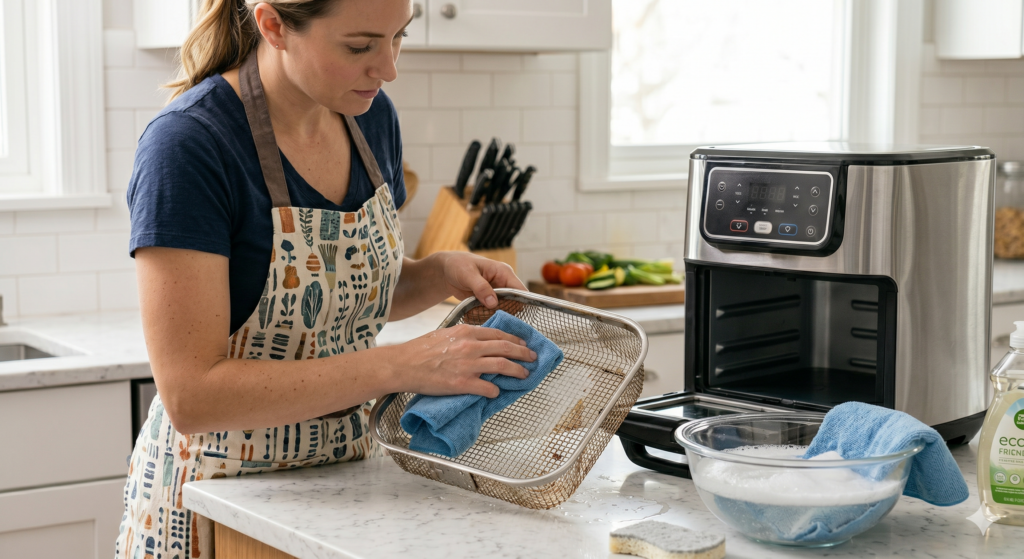
If your air fryer smells like plastic, follow this process before cooking food.
Step 1: Unpack Completely
Remove all packaging materials and protective films.
Step 2: Wash All Removable Parts
Use warm water and mild dish soap.
Step 3: Wipe the Interior
Use a damp microfiber cloth to remove dust and residue.
Step 4: Run an Empty Heat Cycle
Set the air fryer to 400°F (200°C) for 15 minutes.
Step 5: Allow It to Cool
Open windows if necessary and let the appliance cool completely.
Step 6: Repeat If Necessary
Run a second heat cycle if odors remain noticeable.
Many users find that one or two empty cycles completely eliminate the smell.
When Should You Stop Using Your Air Fryer?
While most odors are harmless, some situations require immediate attention.
Stop using the appliance if:
- The smell becomes stronger over time.
- Visible smoke appears.
- Plastic components begin melting.
- Electrical odors develop.
- The appliance trips breakers or sparks.
These symptoms may indicate a defect that requires professional evaluation.
How to Prevent Future Odors
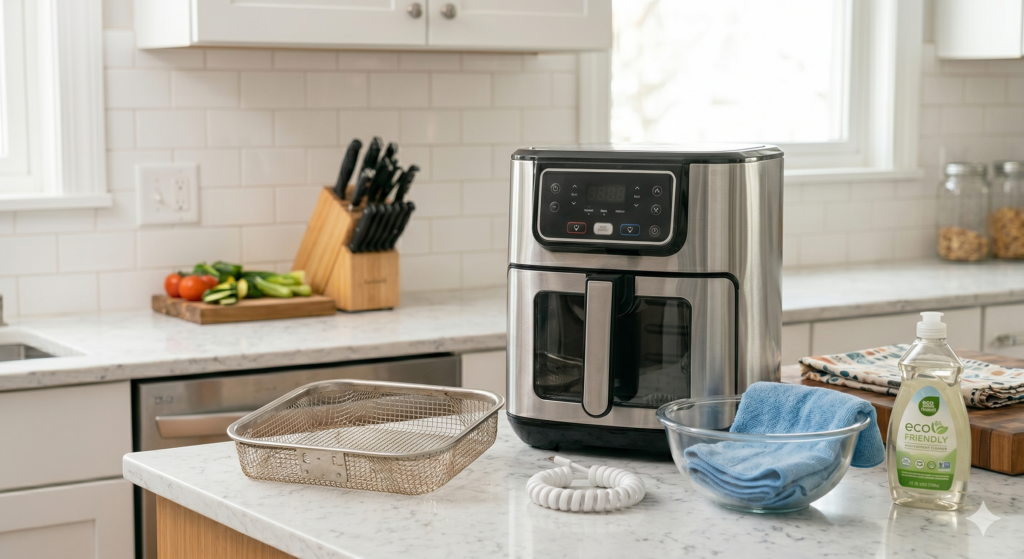
A few simple habits can keep your air fryer smelling fresh and operating efficiently.
Clean After Every Use
Food residue is one of the leading causes of unpleasant smells.
Use High-Quality Oils
Choose oils with appropriate smoke points.
Avoid Overcrowding
Proper airflow prevents overheating.
Inspect the Heating Element
Remove grease and debris before buildup becomes excessive.
Store Properly
Keep the appliance in a clean, dry location.
Is a Plastic Smell Always a Problem?
Fortunately, no.
For many air fryer owners, a mild plastic smell during the first few uses is simply part of the break-in process. As manufacturing residues burn away and the appliance settles into regular use, the odor usually fades quickly.
The key is paying attention to how the smell behaves over time. A temporary odor that gradually disappears is rarely a cause for concern, while persistent or worsening smells deserve further investigation.
By cleaning your air fryer regularly, maintaining proper airflow, and following manufacturer recommendations, you can enjoy safe, odor-free cooking and extend the lifespan of your appliance. The next time you notice a strange smell, you’ll know exactly what to check and how to address it, allowing you to get back to preparing delicious, crispy meals with complete confidence.