Air fryers have become one of the most popular kitchen appliances for a simple reason: they make cooking easier, faster, and healthier. Whether you’re preparing chicken, vegetables, seafood, or frozen snacks, an air fryer can deliver crispy and delicious results with minimal effort.
For beginners, however, one challenge often stands in the way of success—knowing the right cooking times and temperatures. Cook food too long, and it becomes dry. Cook it too little, and it may not be safe to eat. Understanding the basics of air fryer cooking times is the key to consistently great meals.
This guide will help you learn how air fryers work, understand temperature settings, avoid common mistakes, and use a practical cooking chart to confidently prepare your favorite foods.
Why Cooking Times Matter in an Air Fryer
Unlike traditional ovens, air fryers cook food by circulating hot air at high speed around the ingredients. This process creates a crispy exterior while cooking the inside evenly.
Because air fryers are highly efficient, foods generally cook faster than they would in a conventional oven.
Several factors influence cooking time:
- Food thickness
- Fresh or frozen ingredients
- Air fryer model
- Basket size
- Cooking temperature
Learning proper cooking times helps you achieve better flavor, texture, and consistency.
How Air Fryers Cook Food Faster
An air fryer uses a powerful heating element and rapid air circulation system to surround food with hot air.
Benefits include:
- Faster cooking
- Crispier texture
- Less oil usage
- Even browning
- Reduced cleanup
Because of this intense airflow, many recipes require 20–30% less cooking time compared to an oven.
Understanding Air Fryer Temperatures
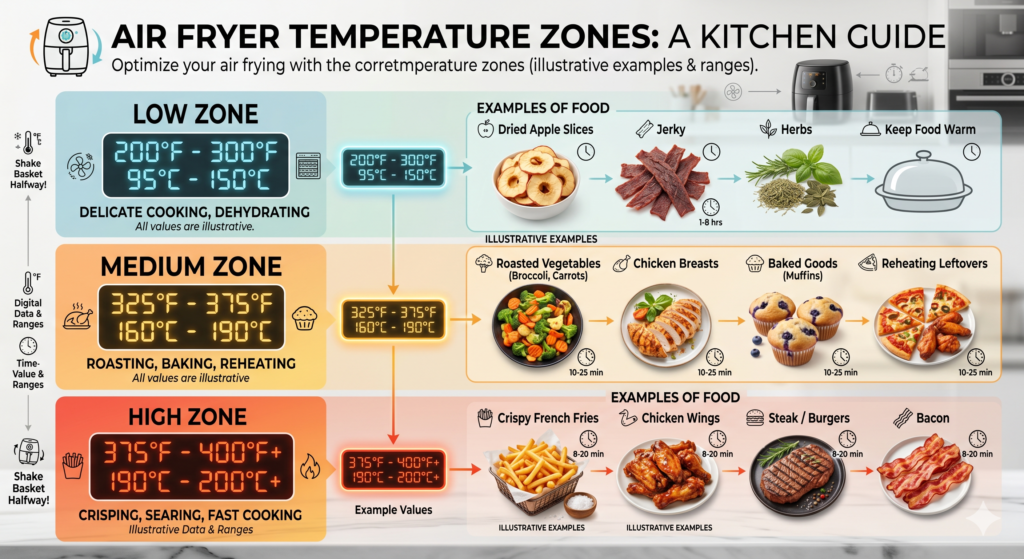
Choosing the right temperature is just as important as selecting the correct cooking time.
Low Temperatures (300°F–350°F)
Best for:
- Reheating leftovers
- Baking desserts
- Delicate foods
- Keeping food warm
Examples:
- Muffins
- Cookies
- Pizza reheating
Medium Temperatures (350°F–380°F)
Best for:
- Chicken breasts
- Vegetables
- Pork chops
- Fish fillets
This range offers excellent balance between browning and moisture retention.
High Temperatures (390°F–400°F)
Best for:
- French fries
- Chicken wings
- Frozen foods
- Bacon
Higher temperatures help create the crispy texture many air fryer users love.
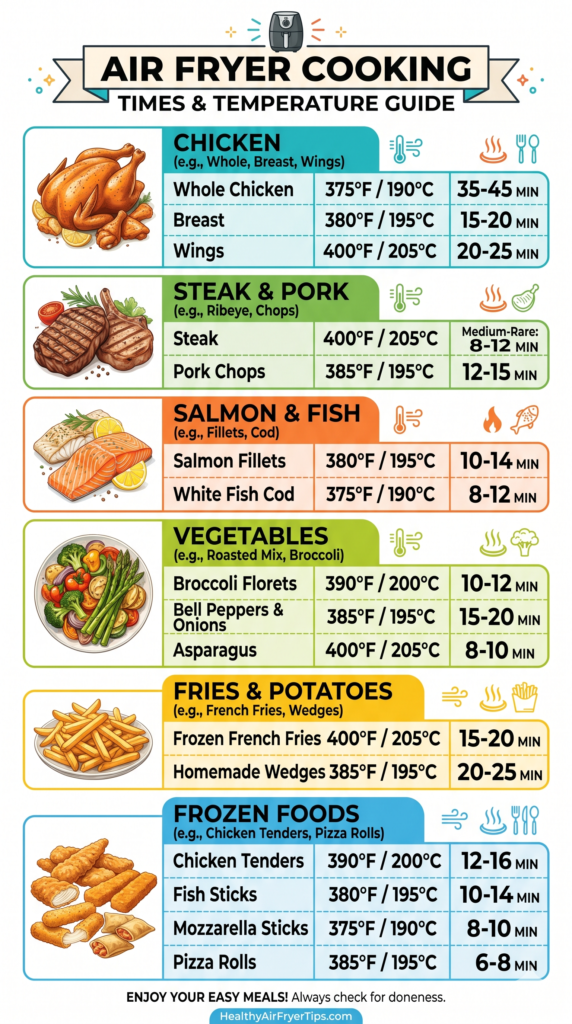
Air Fryer Cooking Times Chart for Beginners
Use this quick-reference chart as a starting point.
| Food | Temperature | Time |
|---|---|---|
| Chicken Breast | 375°F | 16–20 min |
| Chicken Wings | 400°F | 18–22 min |
| Steak | 400°F | 8–12 min |
| Salmon | 390°F | 8–10 min |
| Shrimp | 400°F | 6–8 min |
| Pork Chops | 380°F | 12–15 min |
| Broccoli | 375°F | 8–10 min |
| Carrots | 380°F | 12–15 min |
| French Fries | 400°F | 15–20 min |
| Frozen Nuggets | 400°F | 10–12 min |
| Onion Rings | 400°F | 10–12 min |
Remember that these times may vary slightly depending on your air fryer model.
Step-by-Step: How to Cook Any Food in an Air Fryer
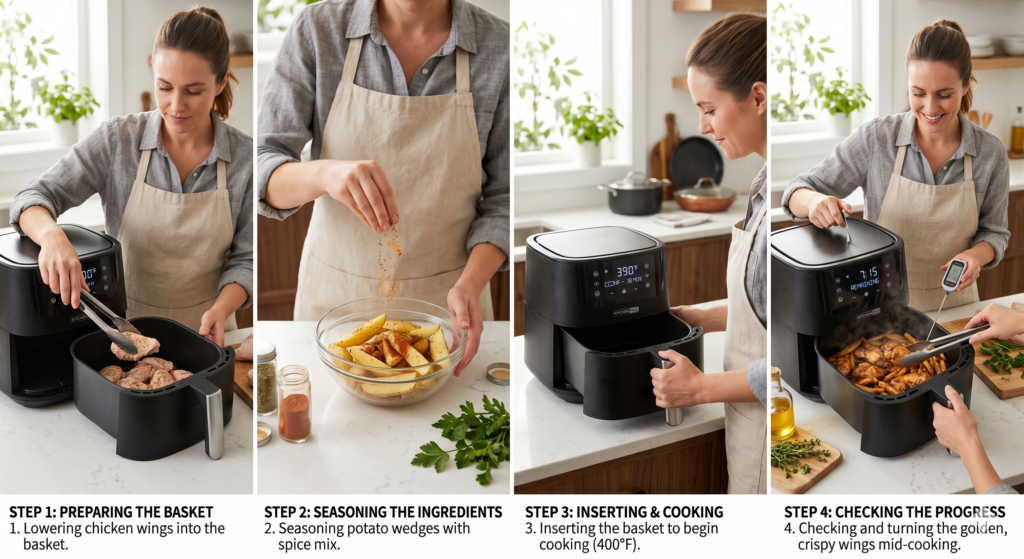
Following a simple process will dramatically improve your results.
Step 1: Preheat the air fryer.
Preheating for 3–5 minutes helps food cook evenly and develop a crisp texture.
Many modern air fryers include a preheat function, but manually warming the basket works just as well.
Step 2: Prepare and Season the Food
Pat ingredients dry when possible.
Apply:
- Olive oil
- Avocado oil
- Dry seasonings
- Marinades
Removing excess moisture helps food crisp more effectively.
Step 3: Arrange Food Properly
Place food in a single layer whenever possible.
Avoid stacking ingredients.
Good airflow is one of the biggest advantages of air fryer cooking.
Step 4: Shake or Flip Halfway Through
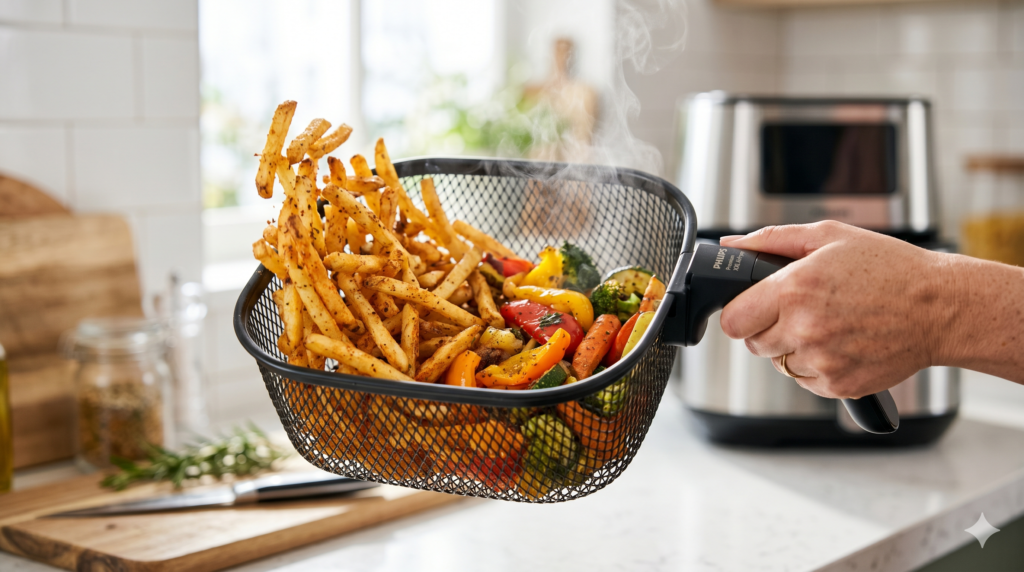
Many foods benefit from being turned during cooking.
Examples include:
- Fries
- Vegetables
- Chicken wings
- Frozen snacks
This promotes even browning on all sides.
Step 5: Check Internal Temperature
For proteins, a meat thermometer is your best friend.
Safe internal temperatures include:
- Chicken: 165°F
- Pork: 145°F
- Fish: 145°F
- Ground meat: 160°F
Never rely solely on cooking time.
Common Air Fryer Mistakes Beginners Make
Learning what not to do can save a lot of frustration.
Overcrowding the Basket
This is the most common mistake.
When food is packed too tightly:
- Airflow decreases
- Crispiness suffers
- Cooking becomes uneven
Cook in batches if necessary.
Using Too Much Oil
Air fryers require only a light coating of oil.
Excess oil can:
- Cause smoking
- Create mess
- Reduce crispiness
A small amount is usually enough.
Ignoring Food Size
Large chicken breasts and thick steaks require more cooking time than smaller portions.
Adjust accordingly and always check for doneness.
Forgetting to Clean the Basket
Food residue affects airflow and performance.
Regular cleaning improves both cooking results and appliance lifespan.
Foods That Cook Best in an Air Fryer
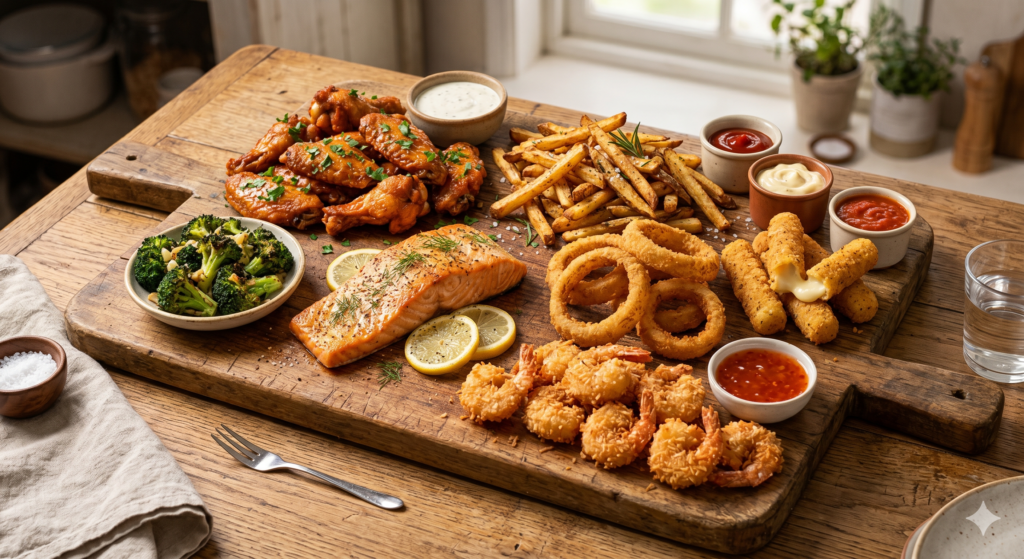
Some foods seem made specifically for air fryer cooking.
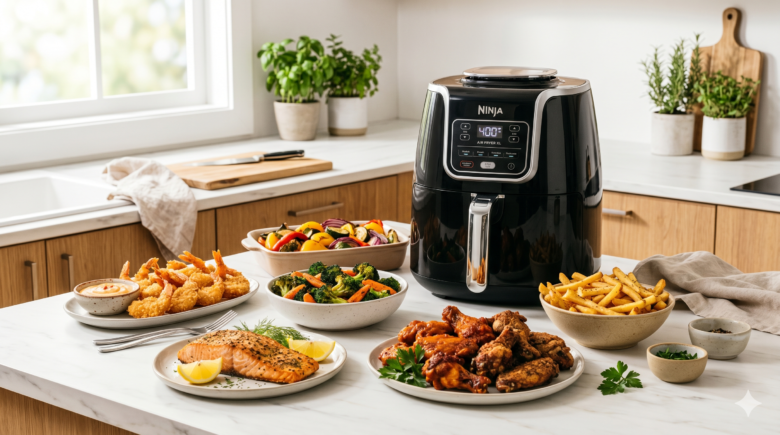
Top beginner-friendly choices include:
Chicken Wings
Crispy outside, juicy inside, and no deep fryer required.
French Fries
One of the most popular air fryer foods.
Salmon
Quick cooking with excellent moisture retention.
Vegetables
Broccoli, carrots, Brussels sprouts, and zucchini develop incredible texture.
Frozen Snacks
Nuggets, mozzarella sticks, and onion rings become crispy without extra oil.
These foods are ideal for building confidence as you learn your air fryer.
Essential Tips for Better Results
Small adjustments often produce major improvements.
Use a meat thermometer.
It removes guesswork and improves consistency.
Dry Food Before Cooking
Less moisture equals better browning.
Don’t Skip Preheating
A hot basket promotes crispiness.
Experiment Gradually
Every air fryer behaves slightly differently.
Keeping notes on cooking times helps you fine-tune future meals.
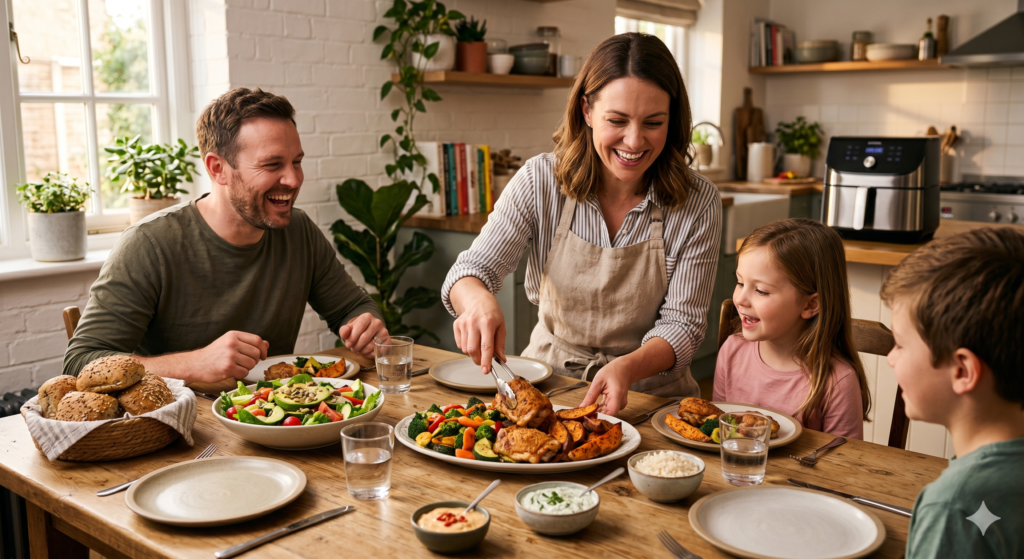
Build Confidence One Meal at a Time
Mastering an air fryer doesn’t require years of cooking experience. Once you understand the relationship between temperature, cooking time, and food type, you’ll be able to prepare delicious meals with ease.
Start with simple foods like chicken, vegetables, or frozen snacks. Use the cooking chart as your guide, pay attention to internal temperatures, and don’t be afraid to make small adjustments along the way.
Before long, you’ll discover that your air fryer is more than just another kitchen appliance—it’s a tool that can transform everyday cooking into a faster, simpler, and more enjoyable experience. Every meal becomes an opportunity to create something crispy, flavorful, and satisfying while building skills that will serve you for years to come.