Air fryers have earned a reputation as one of the safest and most convenient kitchen appliances available today. They cook food quickly, use less oil than traditional frying methods, and are designed with multiple built-in safety features. Despite this, stories of kitchen fires involving air fryers occasionally appear online, leaving many owners wondering whether their appliance could become a fire hazard.
The reassuring news is that air fryers are generally very safe when they are used correctly and properly maintained. Most reported incidents are linked to misuse, poor maintenance, damaged electrical components, or faulty appliances rather than the cooking technology itself.
Understanding what can increase the risk of an air fryer fire—and how to prevent it—will help you cook with confidence while protecting your home and family.
In this guide, you’ll learn whether an air fryer can catch fire, the most common causes of fire hazards, warning signs you should never ignore, and practical safety tips every air fryer owner should follow.
Can an Air Fryer Really Catch Fire?
The short answer is yes—but it is extremely uncommon.
Like any appliance that generates high temperatures using electricity, an air fryer has the potential to become a fire hazard if something goes wrong.
However, modern air fryers are equipped with multiple safety features, including:
- Automatic shut-off systems
- Overheat protection
- Built-in timers
- Heat-resistant housing
- Temperature control sensors
When these systems are working correctly and the appliance is used according to the manufacturer’s instructions, the risk of fire is very low.
Why Air Fryers Are Generally Safe
Air fryers are designed to operate safely at high cooking temperatures.
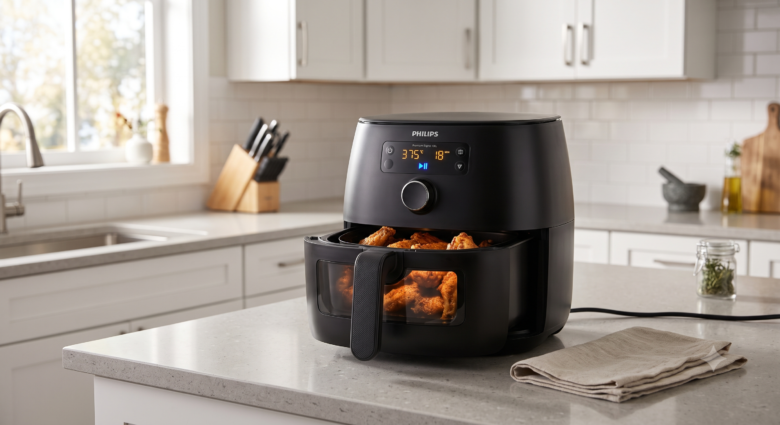
Unlike deep fryers, they do not contain large amounts of hot cooking oil, which significantly reduces the risk of grease fires.
Most quality air fryers also include:
- Automatic temperature regulation
- Thermal protection switches
- Cool-touch handles
- Ventilation systems
- Stable non-slip feet
These features help prevent overheating during normal use.
Common Causes of Air Fryer Fires
Most air fryer fires are preventable.
Here are the most common causes.
1. Grease Buildup
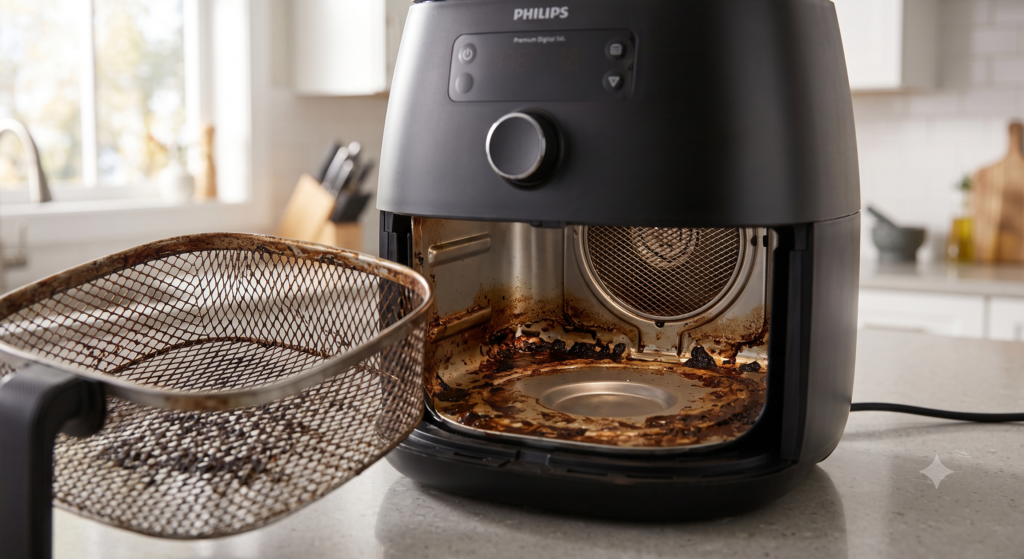
Old grease is one of the biggest fire risks.
When grease accumulates around the heating element or inside the cooking chamber, it can begin to smoke heavily and, in rare cases, ignite.
This is especially common if the appliance has not been cleaned regularly.
Foods that produce large amounts of grease include:
- Bacon
- Chicken wings
- Burgers
- Sausages
- Fatty steaks
Regular cleaning dramatically reduces this risk.
2. Blocked Air Vents
Air fryers rely on continuous airflow to regulate temperature.
If the rear or side vents become blocked by walls, towels, or other objects, heat can build up inside the appliance.
Always leave several inches of space around the air fryer during operation.
3. Damaged Power Cord
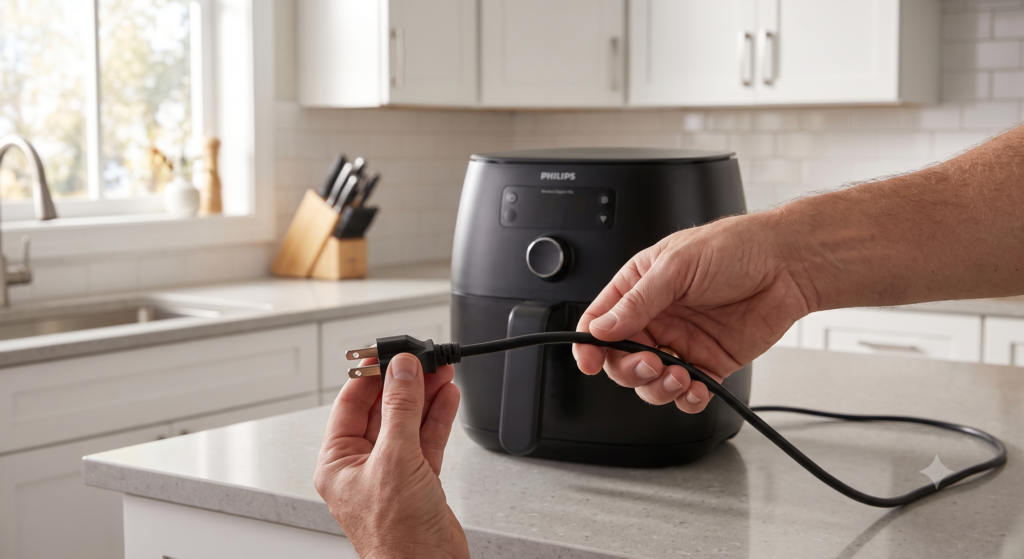
A frayed, cracked, or pinched power cord can create electrical hazards.
Inspect the cord regularly.
Stop using the appliance immediately if you notice:
- Exposed wires
- Burn marks
- Loose connections
- Melted insulation
4. Faulty Electrical Outlets
Loose or damaged outlets may overheat while supplying power to high-wattage appliances.
If the plug feels unusually hot or fits loosely inside the outlet, discontinue use until the outlet has been inspected.
5. Using the Wrong Extension Cord
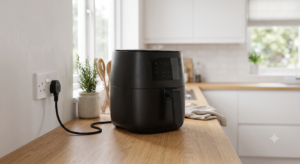
Most manufacturers recommend plugging an air fryer directly into a wall outlet.
Lightweight extension cords may overheat when powering appliances that draw significant electrical current.
If an extension cord is absolutely necessary, use one that is rated for the air fryer’s power requirements.
6. Manufacturing Defects
Although rare, electrical faults inside the appliance can occur.
Buying from reputable manufacturers and registering your appliance for product recall notifications helps reduce this risk.
Warning Signs You Should Never Ignore
Your air fryer may need immediate attention if you notice:
- Smoke that continues after cleaning
- Burning plastic smell
- Sparking
- Flickering display
- Loud popping noises
- Unusual overheating
- Power cord becoming hot
- Appliance shutting off unexpectedly
Stop using the air fryer immediately if any of these warning signs appear.
How to Prevent an Air Fryer Fire
Most fire risks can be prevented by following a few simple habits.
Keep Your Air Fryer Clean
Remove grease and food residue regularly.
Deep clean the appliance according to your usage frequency.
Pay particular attention to:
- Basket
- Drawer
- Heating element
- Air vents
Use the Correct Location
Always place the appliance on:
- A flat surface
- A heat-resistant countertop
- A stable worktop
Keep it away from:
- Curtains
- Wooden cabinets with poor ventilation
- Paper towels
- Plastic containers
- Water sources
Never Block the Air Vents
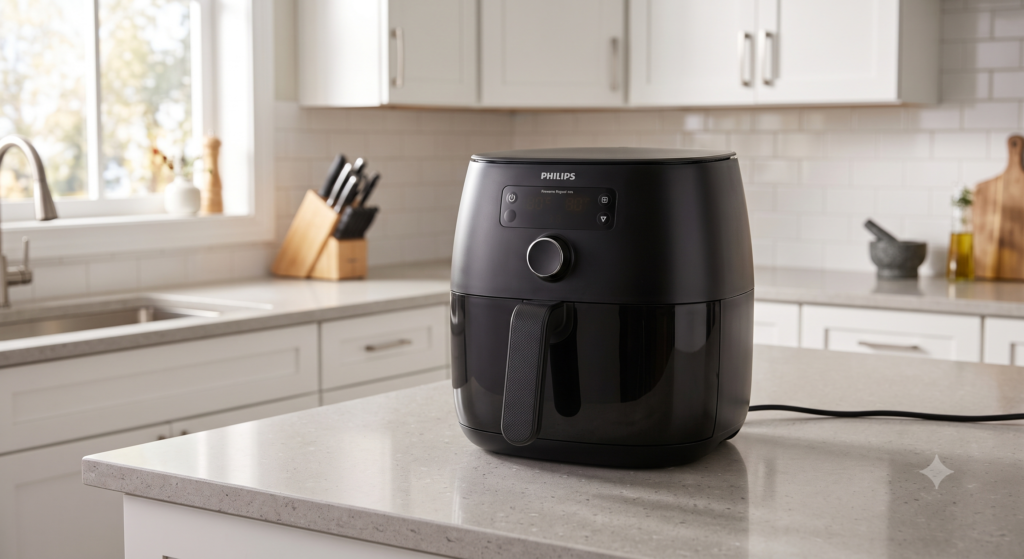
Proper airflow is essential.
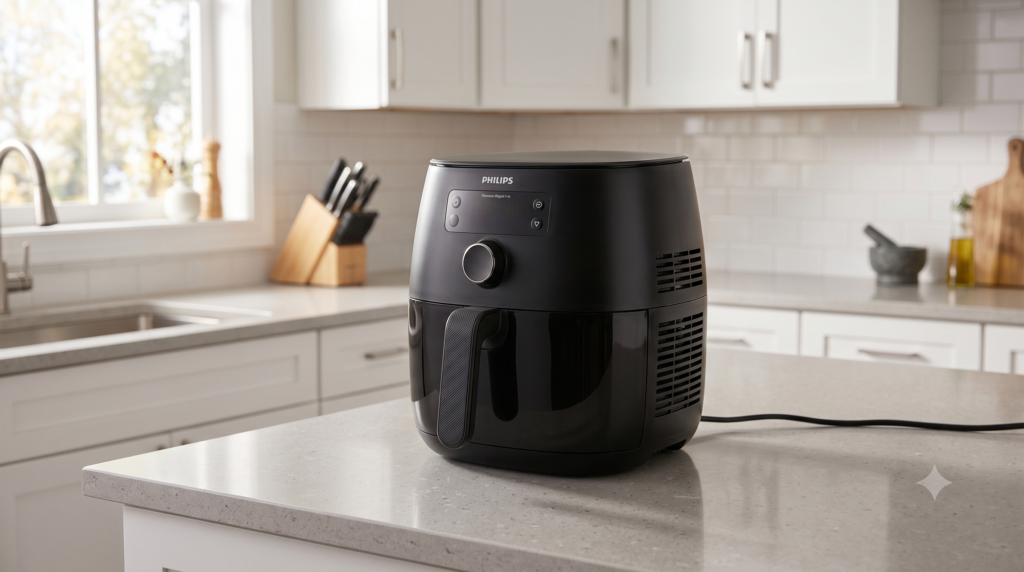
Leave at least 5 inches (13 cm) of space around the rear and sides of the appliance.
Avoid Overfilling the Basket
Overcrowding restricts airflow.
This not only affects cooking performance but may also increase internal temperatures.
Cook in batches if necessary.
Inspect the Appliance Regularly
Every few weeks, check:
- Power cord
- Plug
- Basket coating
- Air vents
- Exterior housing
Replacing worn components early helps prevent larger problems.
What Should You Do If Your Air Fryer Starts Smoking?
Smoke does not always mean there is a fire.
Grease buildup is often the cause.
If you notice smoke:
- Turn off the appliance.
- Unplug it safely.
- Allow it to cool.
- Inspect for grease buildup.
- Clean the appliance thoroughly.
- Do not continue using it if smoke persists.
If flames appear, disconnect the power only if it is safe to do so.
Never pour water onto an electrical appliance.
Use an appropriate fire extinguisher if necessary and contact emergency services if the fire cannot be controlled immediately.
When Should You Replace Your Air Fryer?
Replacement may be the safest option if your air fryer shows signs of serious wear.
Consider replacing it if you notice:
- Cracked housing
- Persistent electrical faults
- Damaged heating element
- Melted components
- Repeated overheating
- Power cord damage that cannot be repaired safely
A well-maintained quality air fryer often lasts several years, but continued use of a damaged appliance is never worth the risk.
Frequently Asked Questions
Are air fryers more dangerous than ovens?
No.
When used correctly, air fryers are generally considered just as safe as other common kitchen appliances.
Can grease catch fire inside an air fryer?
Although uncommon, excessive grease buildup can ignite under certain conditions.
Regular cleaning greatly reduces this risk.
Is it safe to leave an air fryer running unattended?
No.
You should always remain nearby while the appliance is cooking.
Can using aluminum foil cause a fire?
Aluminum foil is generally safe when used correctly, provided it does not block airflow or touch the heating element.
Do cheap air fryers present a greater risk?
Appliances that meet recognized safety standards from reputable manufacturers are generally more reliable than poorly made products with unknown certifications.
Safe Cooking Starts with Good Habits
Air fryers are designed with safety in mind, and the vast majority operate for years without causing any problems. While it is technically possible for an air fryer to catch fire, the risk is extremely low when the appliance is used correctly, cleaned regularly, and maintained in good condition.
Simple habits such as removing grease buildup, checking the power cord, keeping the air vents clear, and using the appliance on a stable, heat-resistant surface can significantly reduce potential risks.
By treating your air fryer with the same care you would give any other electrical appliance, you can enjoy fast, convenient, and worry-free cooking for many years to come. A few minutes of maintenance and attention today can help protect both your appliance and your home tomorrow.